Gao Xingjian at Galerie Claude Bernard, Paris
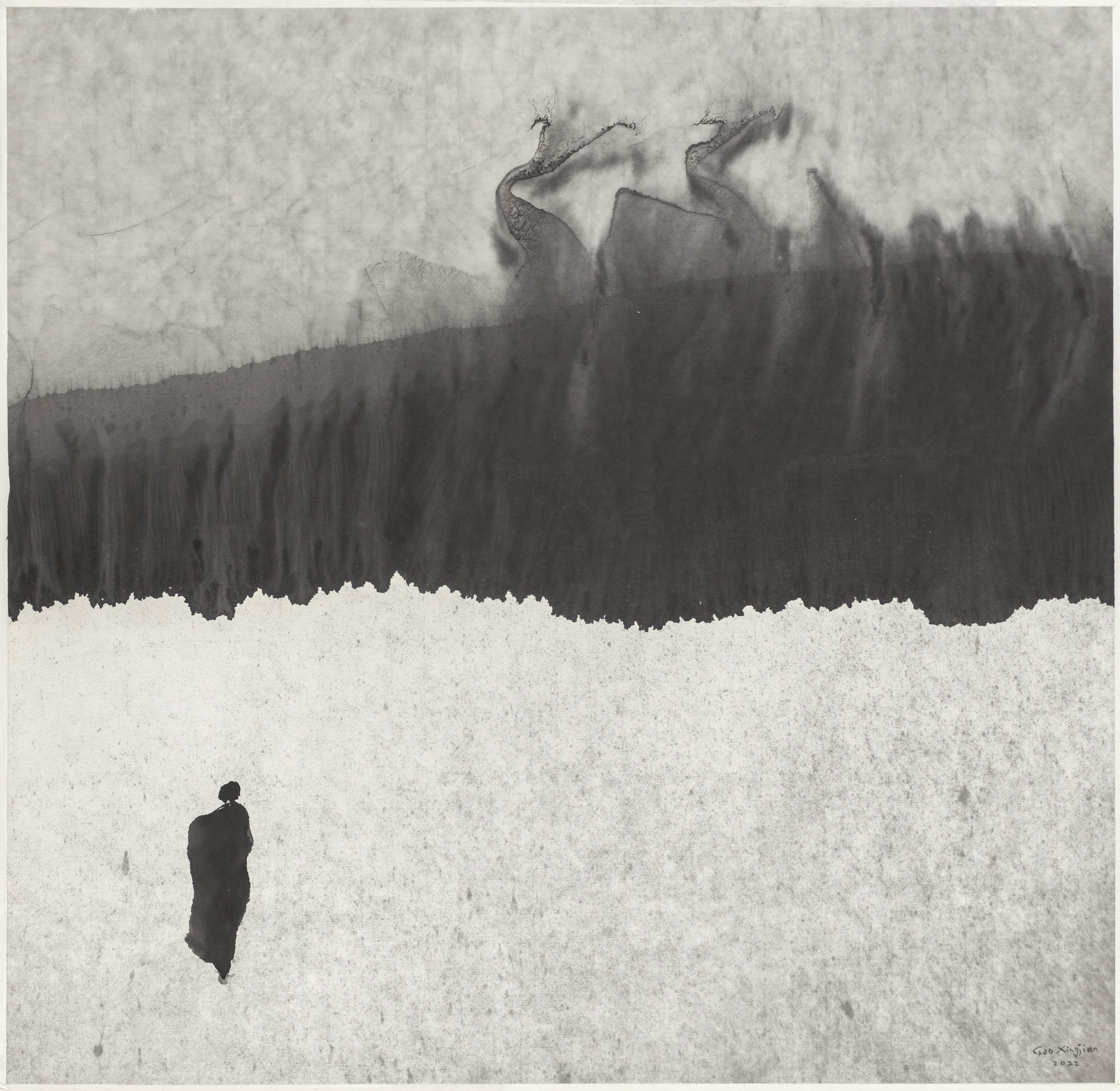
Born in 1940, Ghanzou, China, Gao Xingjian is celebrated as the avant-garde poet, playwright, and novelist who won the Nobel Prize in literature in 2000. Moreover, as an artist, he is also renowned for his ongoing monumental series of ethereal Chinese ink-on-rice paper drawings—ranging from inspired by Daoism, the Chinese literati painting tradition, and Western modernist abstraction. In the 1970s, his experimental aesthetics and sociopolitical ideology led to his persecution during Mao’s Cultural Revolution. Consequently, Gao was forced to burn a suitcase filled with his early manuscripts and was sent to a reeducation camp, where he endured nearly six years of hard labor.
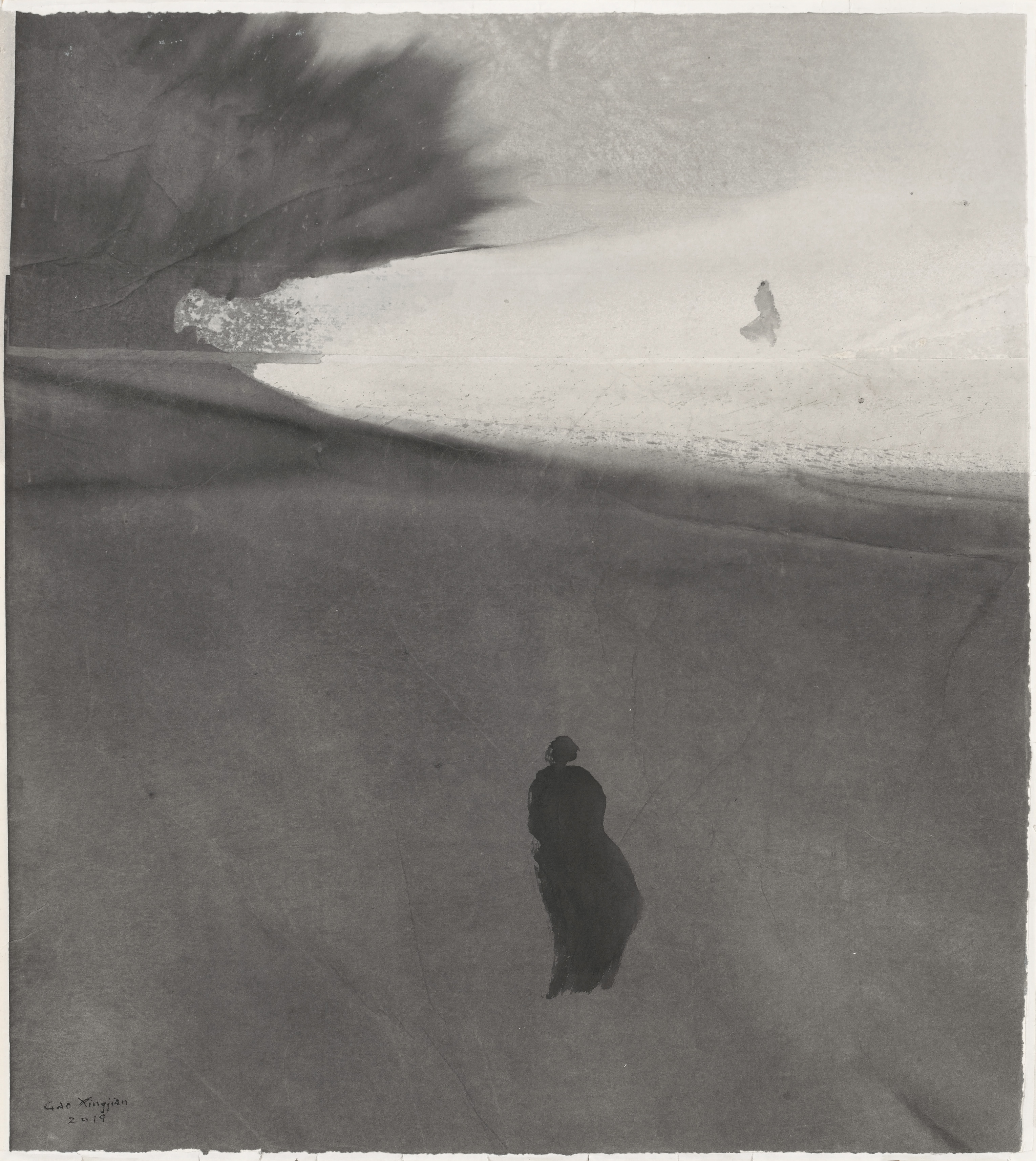
After he was released, he was assigned by the government to work at the Foreign Languages Press but was not allowed to publish his work or to travel abroad until 1979. In 1998, he moved to France where he applied for political asylum and became a French citizen. He has lived in France ever since.
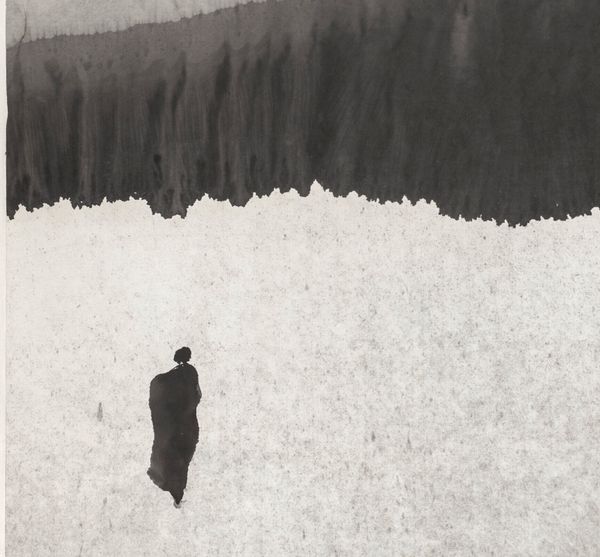
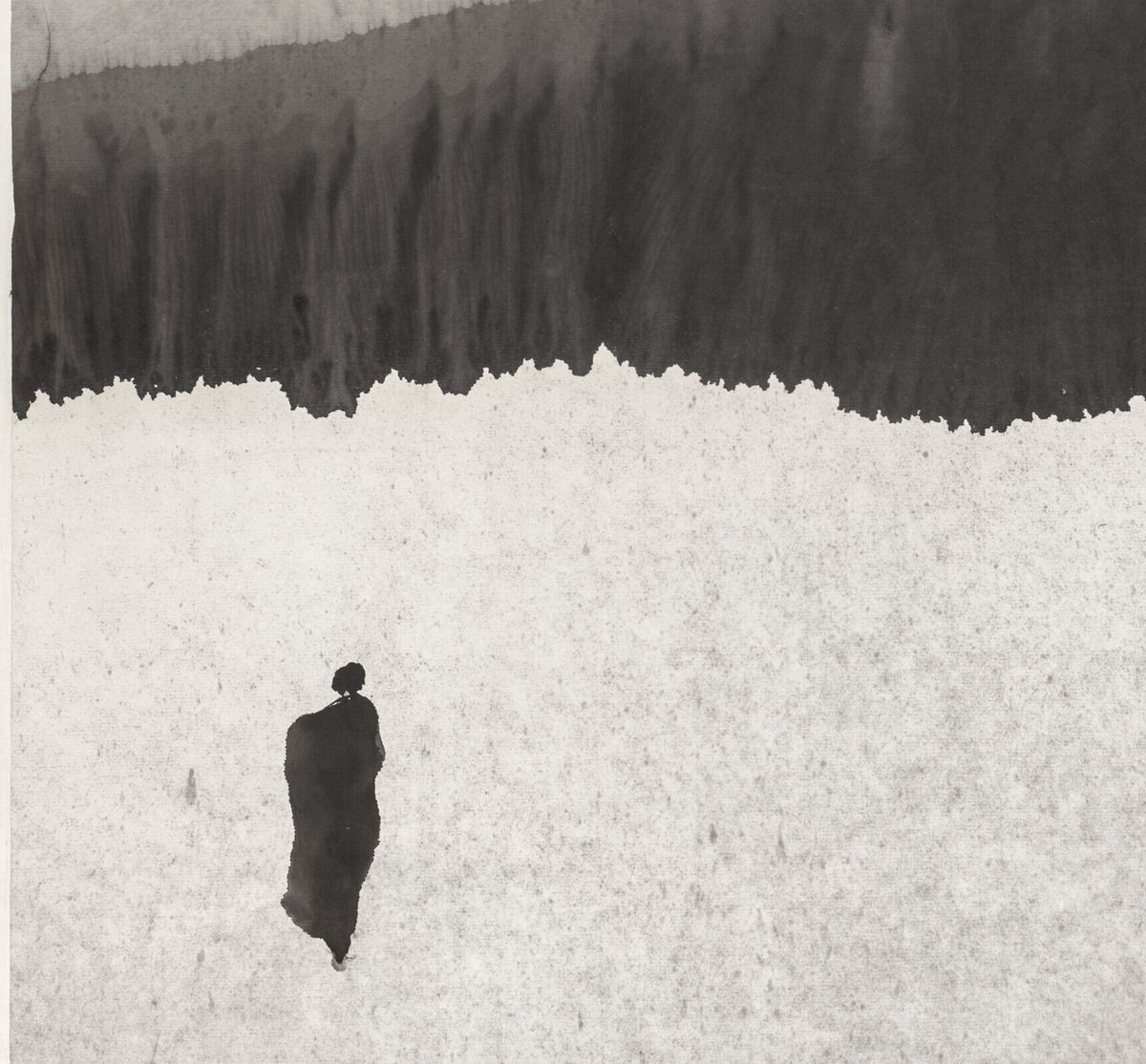
This show features twenty of the artist’s most recent large-scale drawings of otherworldly, abstracted landscapes masterfully rendered through multiple brushstroke techniques applied to brilliant white paper. Many of Gao’s imaginary scenes, at times foreboding confluences of shadow and light, can be interpreted as existential metaphors for memory and consciousness in part because of the trials and tribulations he suffered.
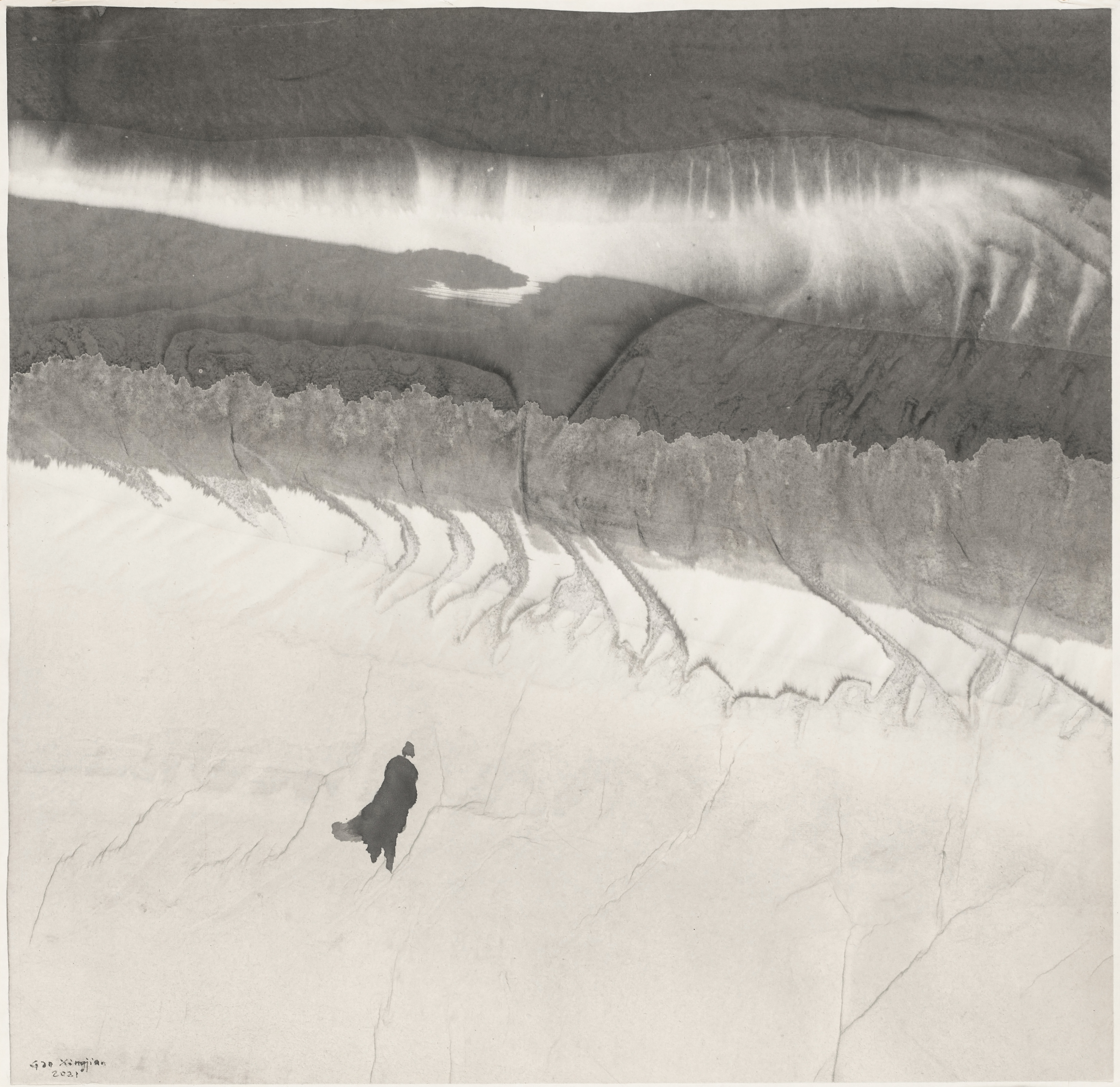
They may also be regarded as symbols of hope. These reflections are often underscored in the titles of his works— Un état d’âme (A State of the Soul); Au bord de l’éxistence (At the Edge of Existence); l’érrance de l’esprit (The Wanderings of the Mind); S’en sortir (To Pull Through). Composed of amorphous shapes, the works feature pools and cascades, plus cavernous valleys conjured by expansive washes of ink applied in dramatically varying gradations of darkness. These compositional devices are often eclipsed by luminous swirling mounds suggestive of majestic ranges of snow-covered mountains and the natural environment in general.
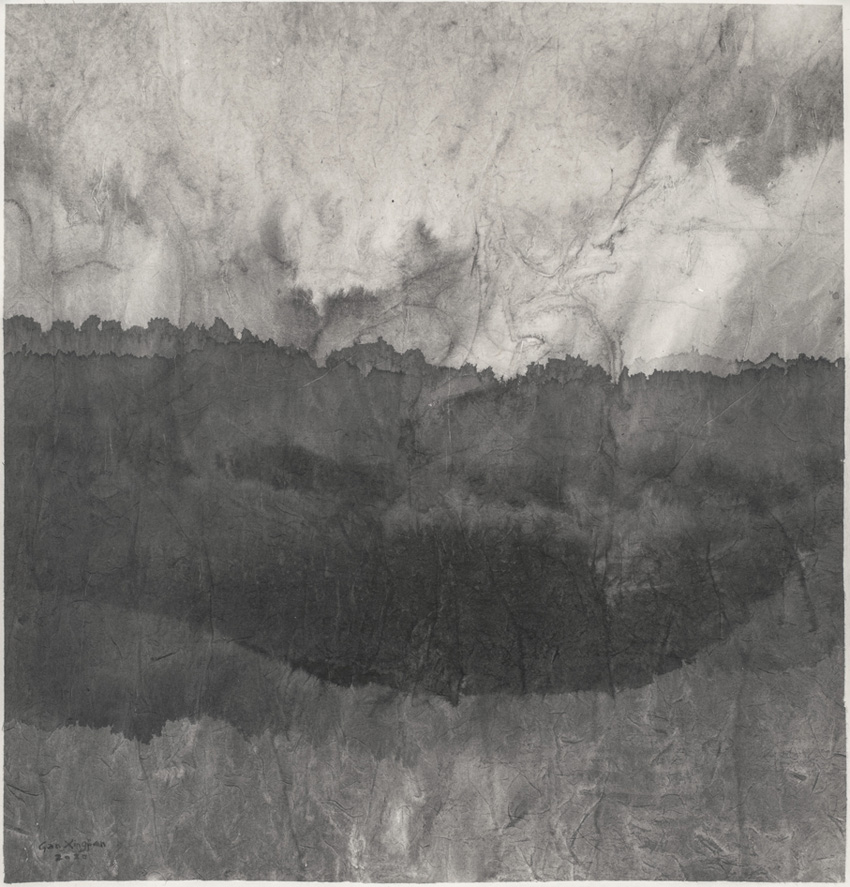
In a number of compositions, depictions of solitary or scattered clusters of dark silhouetted figures appear, as in L’Ésperance (Hope), 2019, in which a person, amid billowing wind, stands alone in a sea made of dove-gray ink. Emerging from the left edge of the paper, a dense medley of feathered strokes evokes a forest of trees. In the far distance, their shadow appears ever so faintly, evaporating in a celestial blanket of white tranquility. In Le feu sauvage (The Wild Fire) (2020), a bottomless black crater engulfs the composition’s foreground against a horizon composed of a soaring precipice of white flames morphing into rays of light. Gao’s compositions synthesize centuries-old Chinese techniques with contemporary aesthetic approaches that merge figuration and abstraction. In so doing, they become meditations on the cyclical relationships between past and present, and between the soul and nature.
Gao Xingjian: Vision intérieure, at Galerie Claude Bernard, Paris, February 3-March 21, 2026.