Wifredo Lam Dreaming
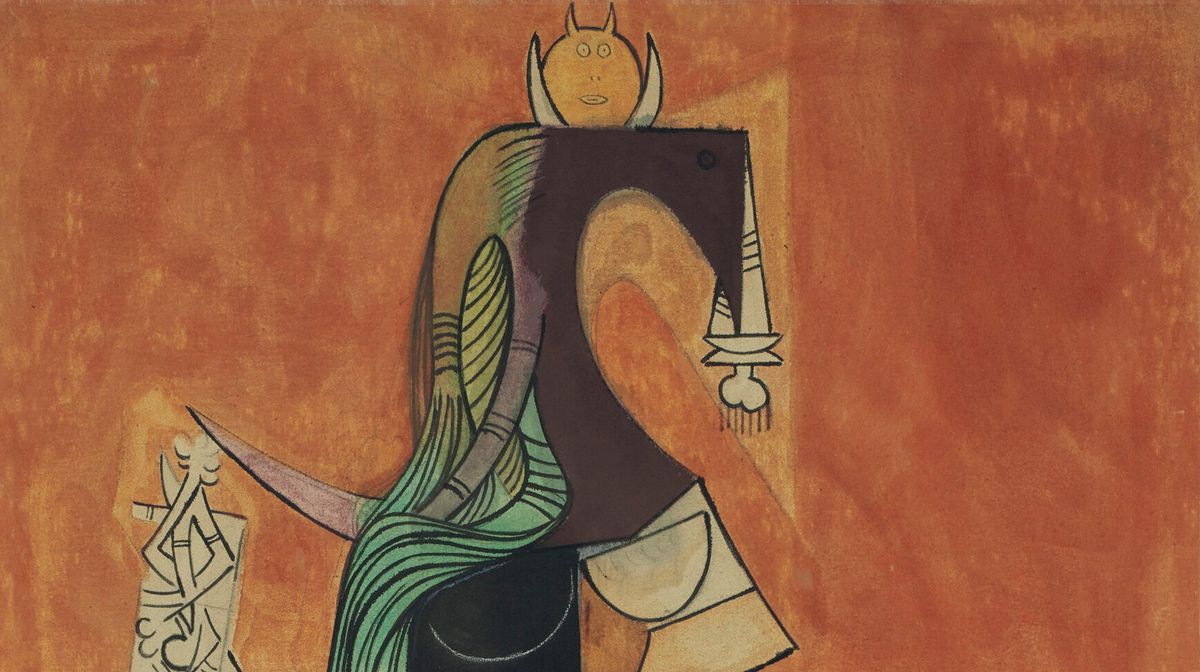
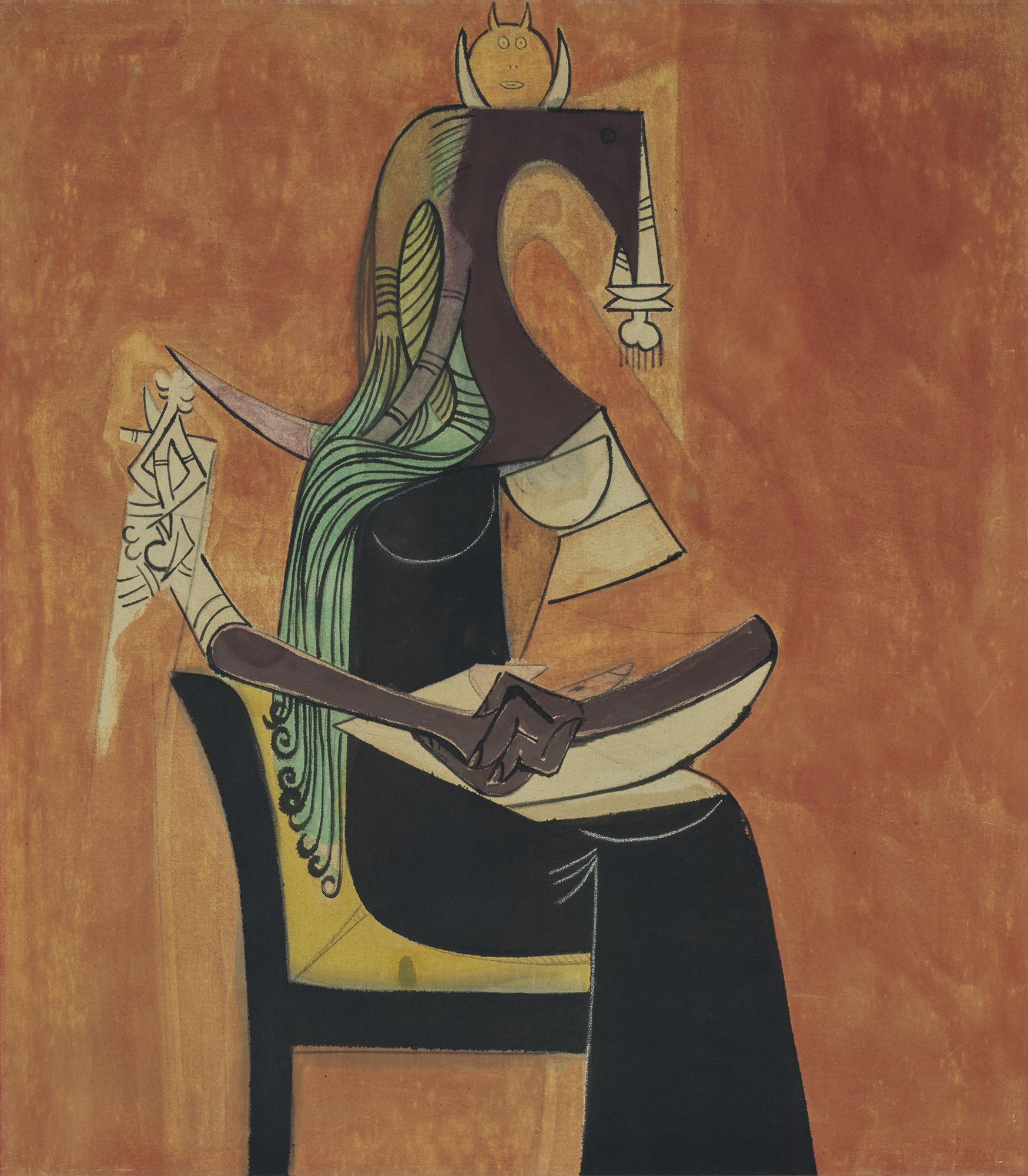
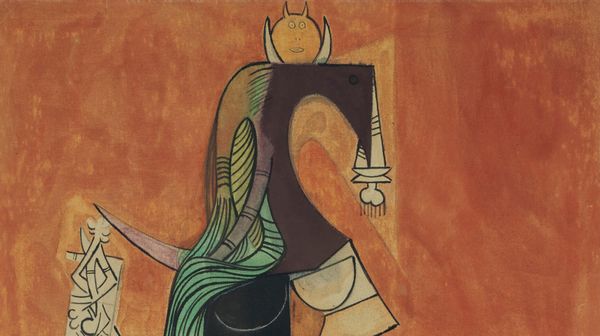
Wifredo Lam (1902–1982) produced a unique and varied oeuvre that reflects his mixed African, Chinese and Cuban heritage. Over the course of his long career, he developed a distinctive lexicon of hybrid shapes—animal-vegetable, and human-animal forms—plus a wide variety of abstract symbols and vigorous markings that correspond to African diaspora religious rituals, including those related to Santería and Voodoo practices that he observed firsthand.
The most comprehensive U.S. survey of works by the Cuban-born artist to date, Wifredo Lam: When I Don’t Sleep, I Dream, offers a revelatory experience. The exhibition features more than 130 works from the 1920s to the 1970s—including major paintings, large-scale works on paper, illustrated books, prints and ceramics, as well as archival material. The show contains many items that have been rarely or never-before shown in the U.S. The title of the exhibition refers to one of Lam’s Surrealist compositions from 1955, a long, horizontal composition of the same name, showing a humanoid creature with extended limbs reclining on an elongated bed. The exhibition is accompanied by a catalogue as well as the first full-scale biography of the artist in English, written by French art critic and philosopher Jacques Leenhardt and in published in 2025 by Thames & Hudson.
Born in Sagua La Grande, Cuba, Lam was the youngest of eight children. His father, a Cantonese intellectual and craftsman, and mother, of Congolese and Hispanic heritage, recognized and encouraged Wifredo’s talent for drawing early on. He attended Havana’s San Alejandro Academy, and at age 21 emigrated to Spain to study painting in Madrid, specializing in portraiture. The first works on view in the exhibition are portraits and figure studies, including a resplendent self-portrait, Sol / Sun, 1925, painted soon after Lam arrived there. The oil-on-burlap composition, about four by three feet, shows the artist clothed in an elaborately embroidered Chinese robe, and holding a fan. Painted in consonance with the heightened colors of Matisse and the Fauves, Lam also espoused the stylistic attributes of painters of the Viennese Secession, in particular Gustav Klimt.
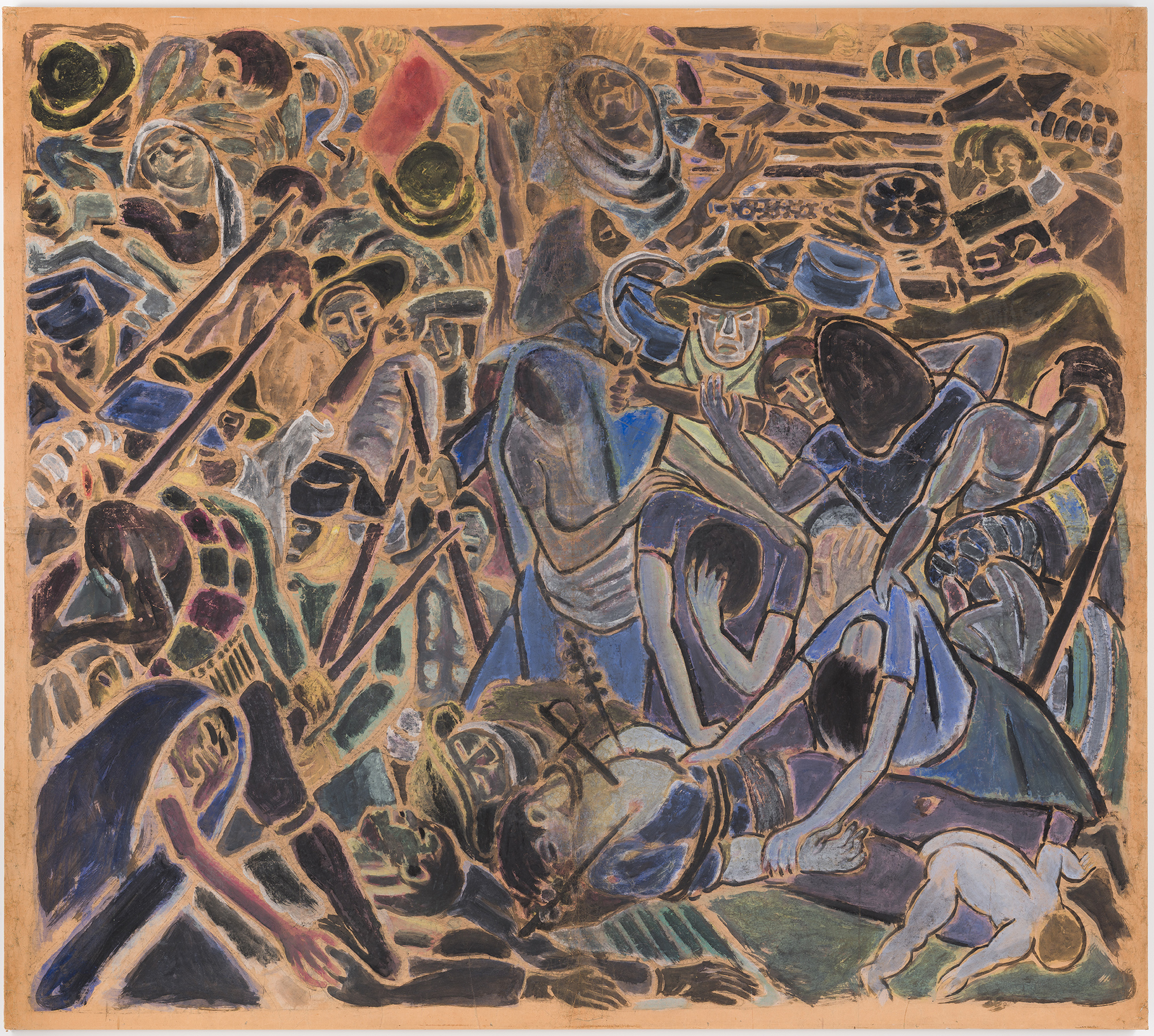
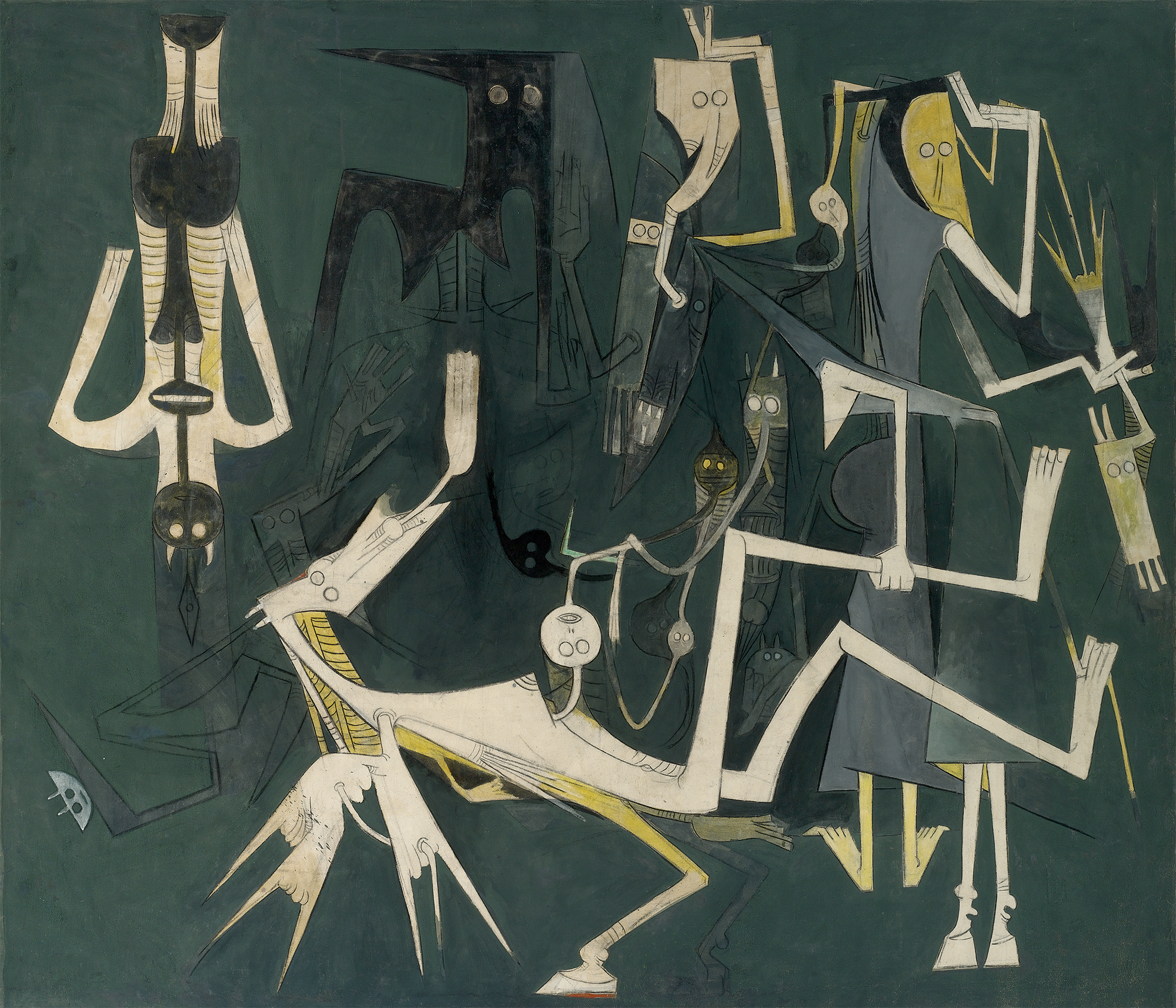
Lam married in 1929, the same year he saw for the first time the work of Pablo Picasso and Juan Gris in person at a Madrid exhibition. The encounter changed the course of Lam’s life and career. As a result, he abandoned traditional realist techniques and began to experiment with novel spatial relationships and quasi-Cubist forms. Amid this artistic breakthrough, tragedy struck the artist in 1931 when his wife and son died of tuberculosis. In the aftermath, Lam began a peripatetic existence, traveling throughout Spain. As the fascist movement gained momentum in the country, Lam, then based in Barcelona, worked for the Republican cause, and produced a number of anti-Franco posters. In this period, he also created the large (nearly seven by eight feet) gouache on paper, The Spanish Civil War (1937), one of the early highlights of the show. This imposing composition of compressed spaces and schematic figures conveys the violence and horrific suffering of the war, and a sense of urgency that summons Picasso’s monumental antiwar canvas Guernica, painted the same year.
As the Franco regime prevailed, Lam fled Barcelona and headed to Paris in 1938. He sought out Picasso, who welcomed the young artist to his studio, surrounded by works of African art. Soon after, he met Surrealist guru André Breton through the photographer (and Picasso’s paramour) Dora Maar, as well as Joan Miró, Max Ernst, Paul Éluard and other Surrealist artists and writers. Cubism and Surrealism would prove to be Lam’s most potent and enduring influences, which he later transformed into his own unique Afro-Caribbean visual language.
As the Nazis approached Paris, Lam fled with Breton and members of the Surrealist group to Marseille, where they boarded a steamship bound for Martinique in the Caribbean. Lam intended to go from there to New York, but unlike others in his entourage, he was denied a visa to enter the country. He wound up living in Havana in 1941, after an absence of eighteen years. His reconnection to his homeland sparked an intense transformation in his art while reflecting his growing fascination with Caribbean myths and tribal rituals.
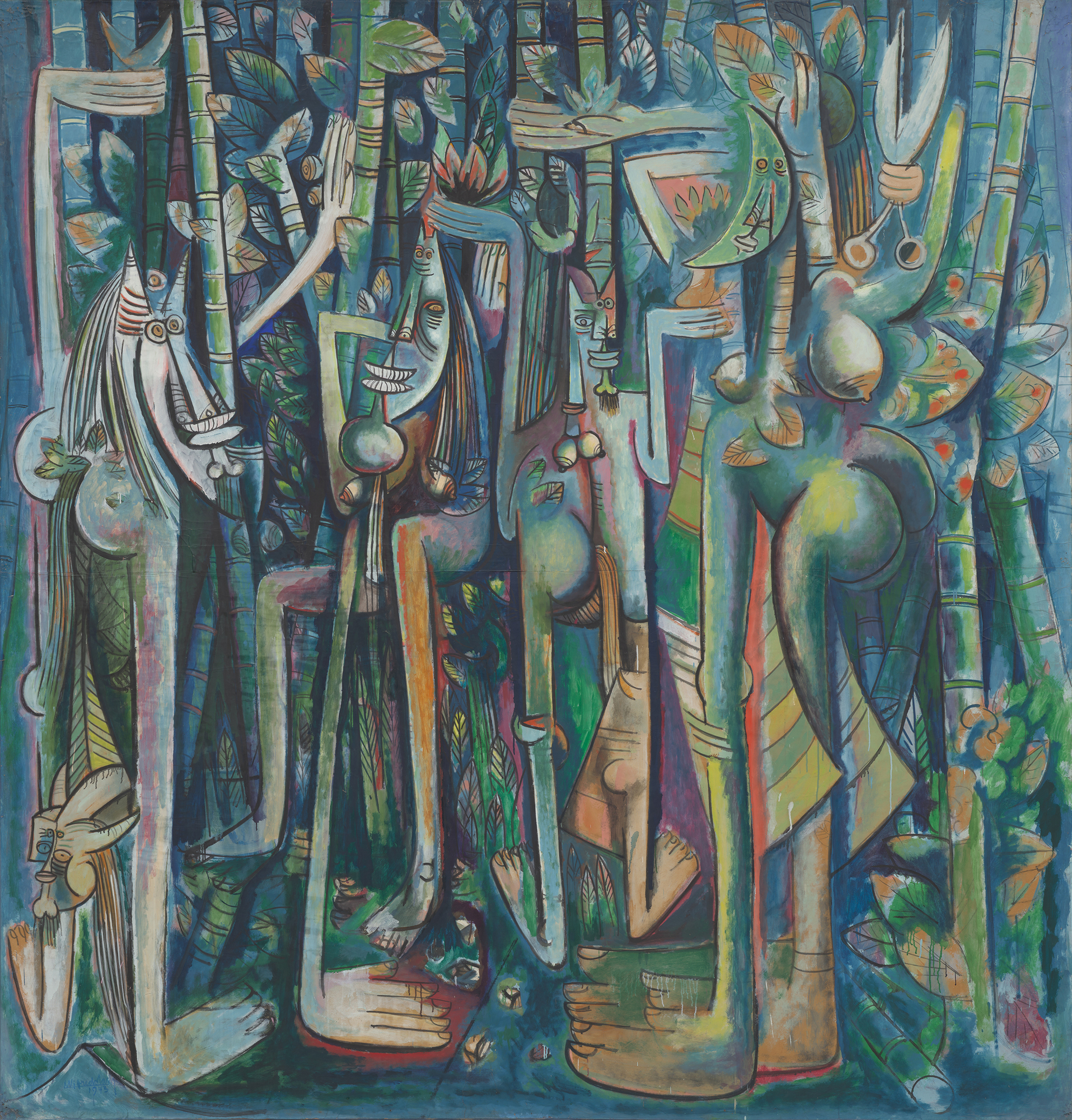
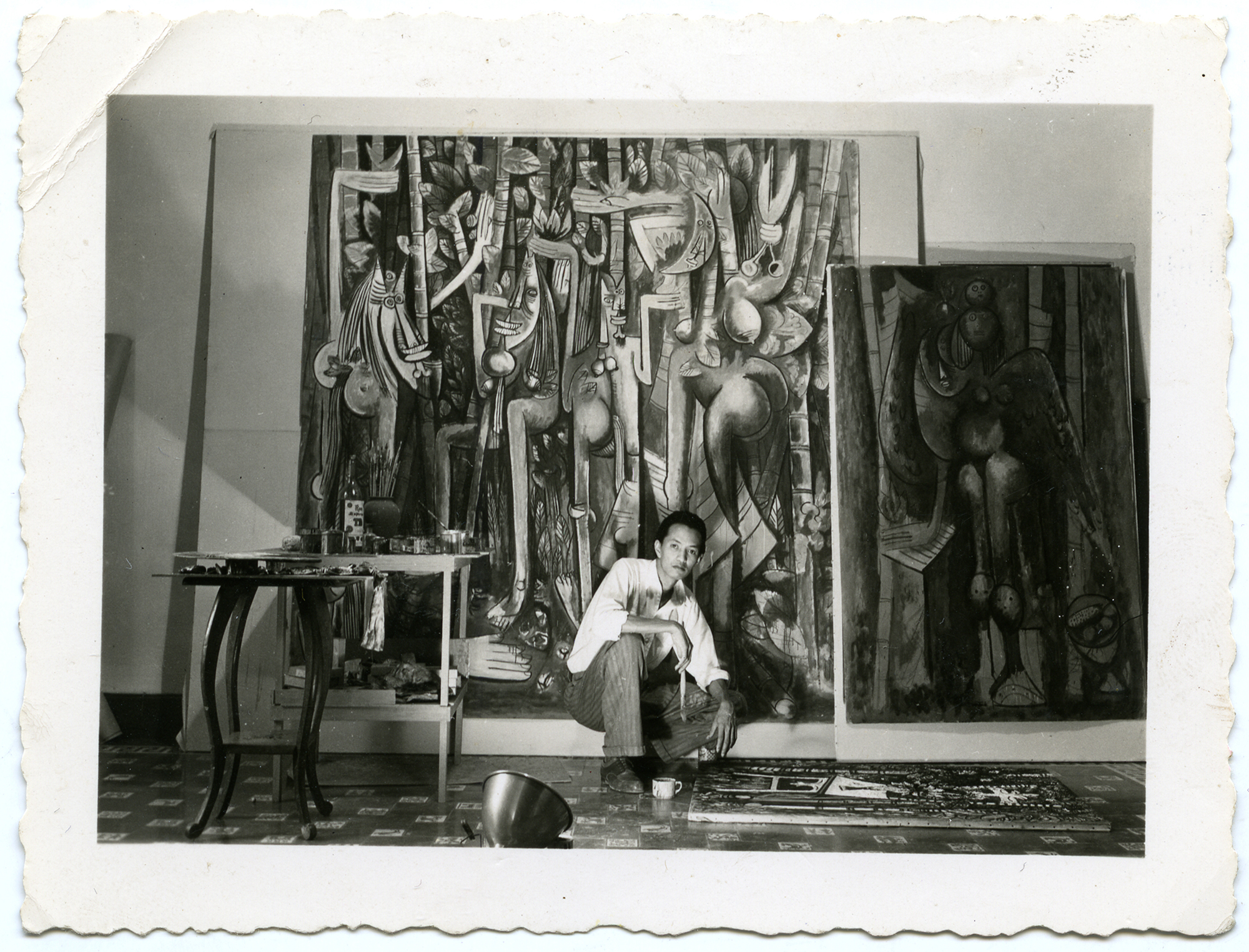
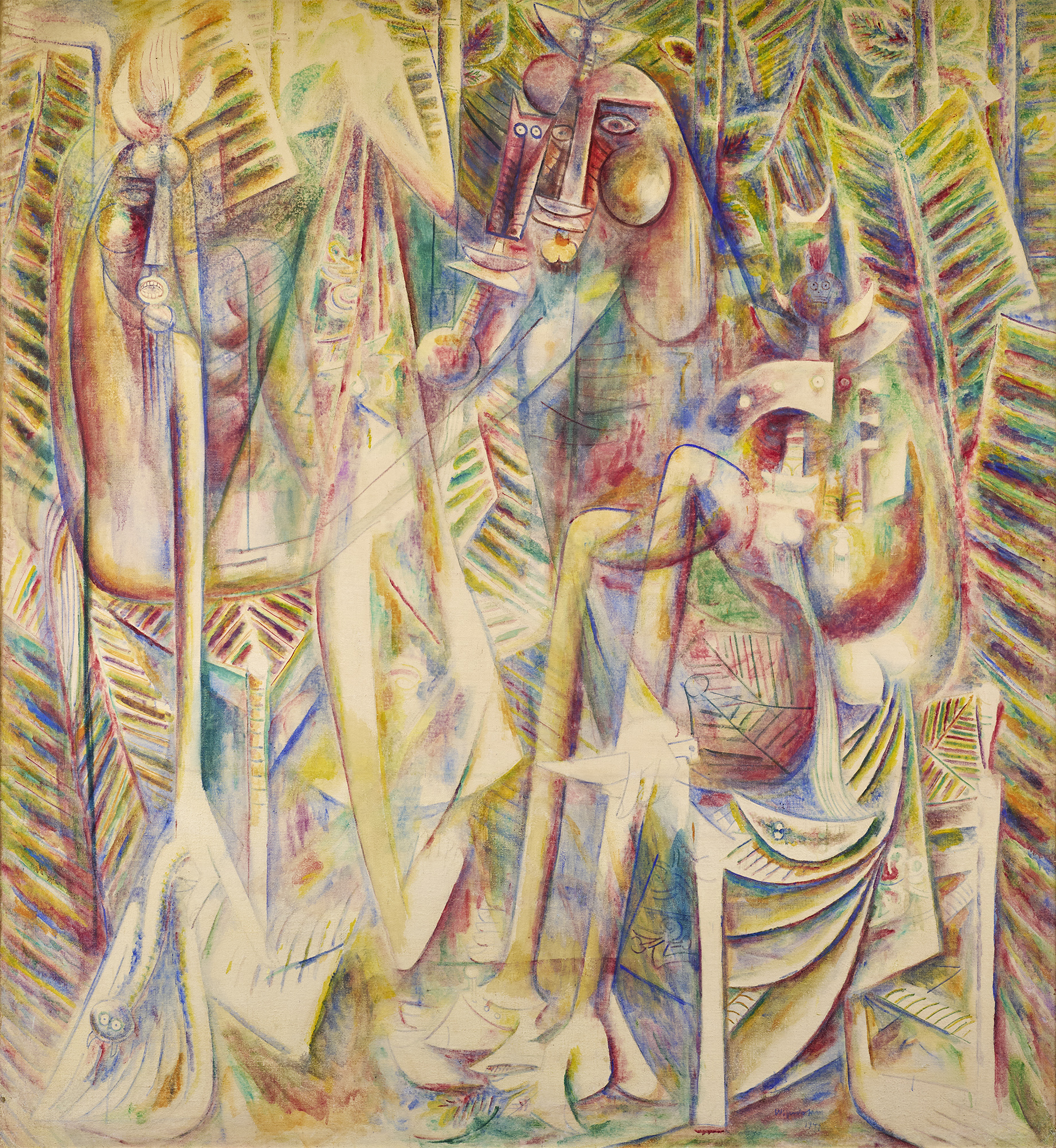
During this time, he produced the pivotal work, The Jungle (La Jungla), 1942–43, a monumental composition that incorporates highly stylized plant forms based on those of Cuban rainforests, and hybrid human and animal shapes in a tightly compressed space. The image also encompasses African masks as well as esoteric references to Santería and voodoo rituals. This work and many related paintings produced in Cuba, such as the luminous Harpe astrale (Astral Harp), 1944, are central to the exhibition as they mark the beginning of Lam’s unique contribution to contemporary art and its lasting influence.
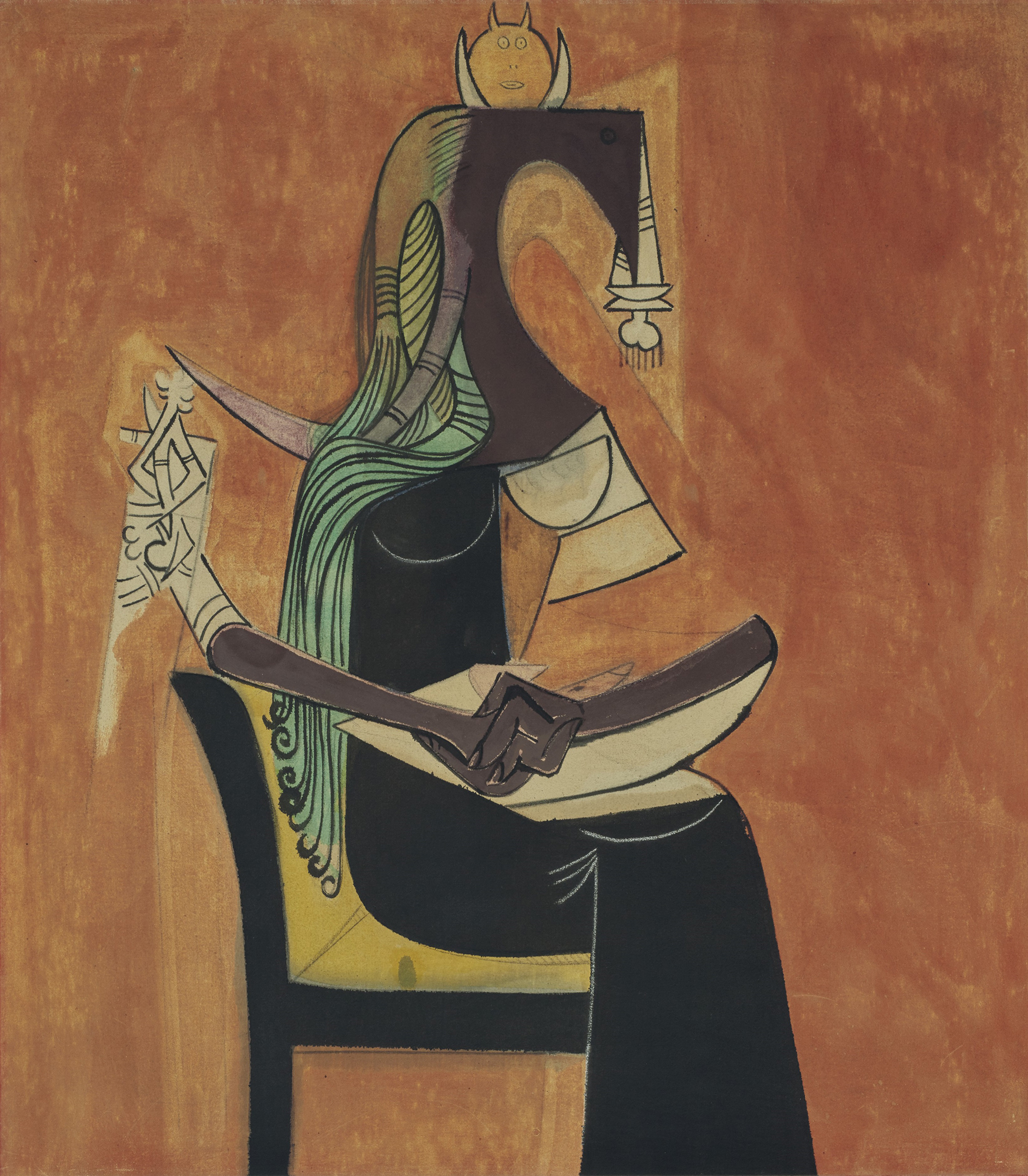
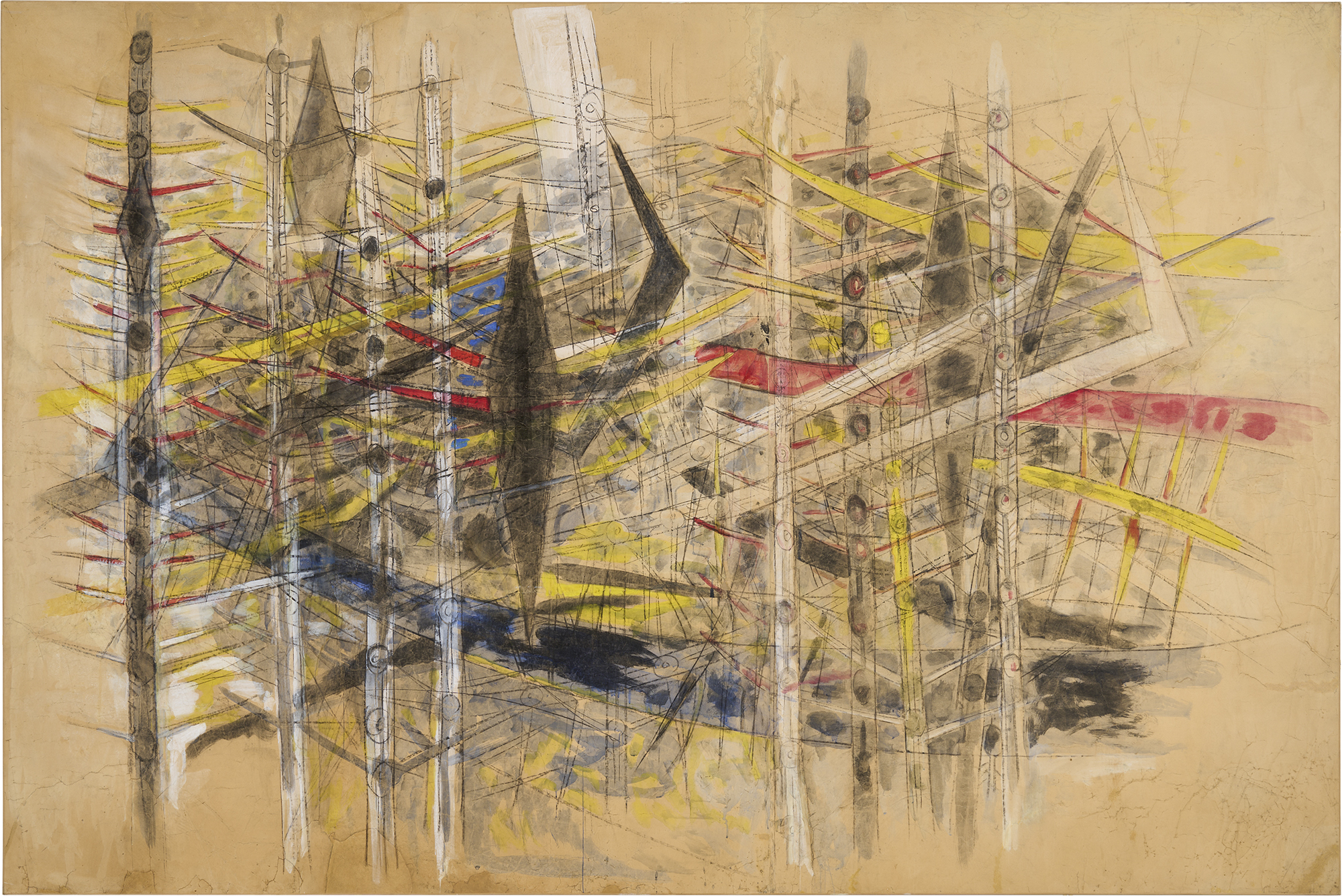
By the end of the war, Lam had developed and refined a personalized iconography and a visionary, otherworldly space. The spikey forms and hybrid creatures that populate his canvases correspond to those in certain works by Ernst and Matta, as well as Graham Sutherland’s contemporaneous Thorn Trees, all of which may be regarded as expressions of post-war angst. In works such as I am (Je Suis) 1949, Lam depicts himself as an uncanny creature, a Santería shaman, perhaps, an exhilarating though ominous presence. During his time in Cuba, Lam’s works were featured in exhibitions in New York and Europe, so that upon his return to Paris in 1952, he was widely recognized as a pioneering figure of the avant-garde. He embraced the experiments of American Abstract Expressionism, European Art informel and other art world trends of the period. In some later works, such as a monumental untitled painting of 1958 (over eight by eleven feet), his brushwork is remarkably looser and mark-making more vigorous than before, reflecting his interest in new means of expression. He also devoted a great deal of attention in later years to ceramics and printmaking; many fine examples are featured in the show’s final galleries.
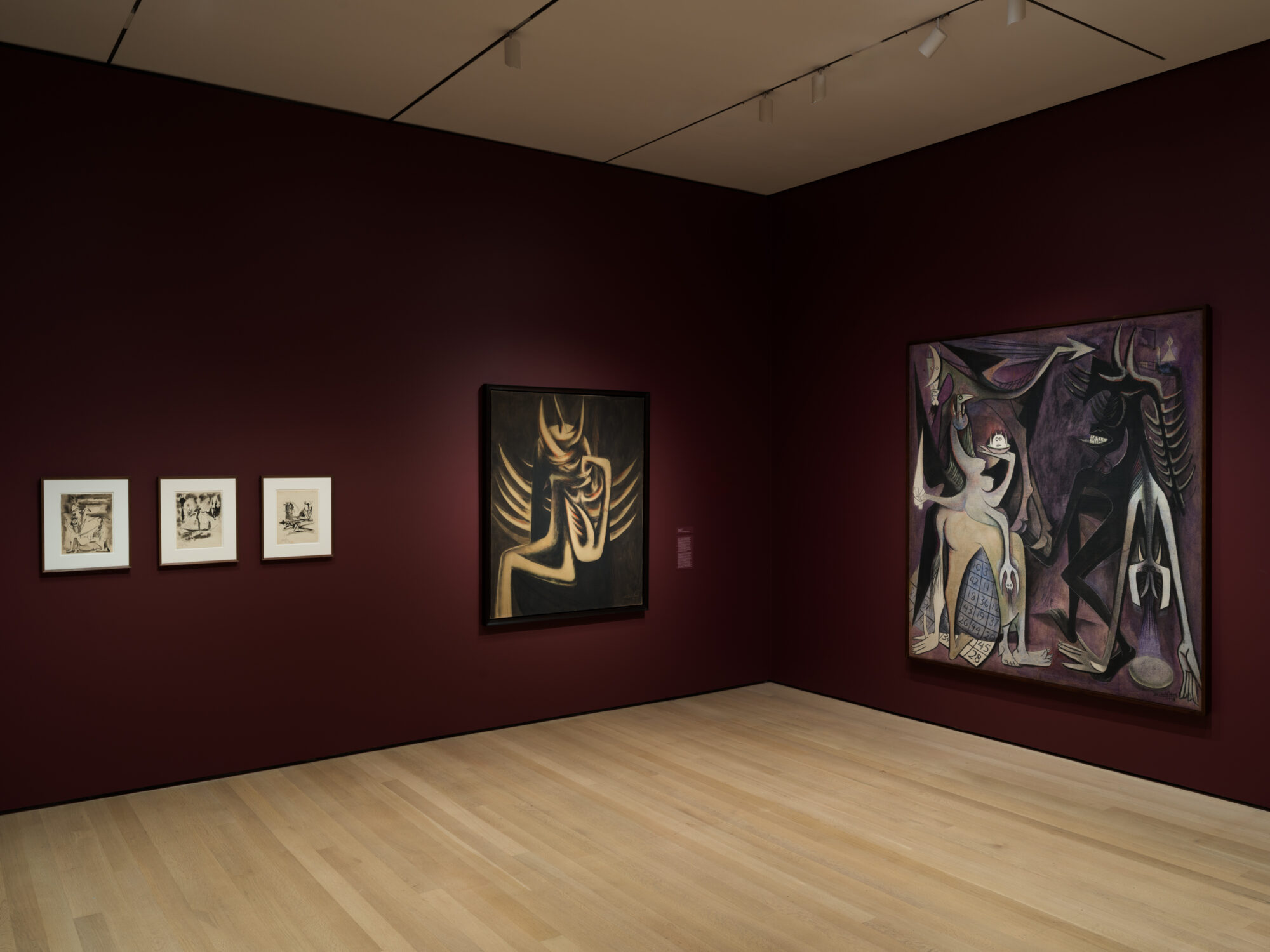
In the 1960s and ’70s, Lam traveled a great deal, with several visits to India. Given his Afro-Cuban heritage and exploration of African diaspora, it is surprising that he visited Africa for the first time only in 1977, with an extended stay in Kenya. Lam suffered a stroke in 1978 and never fully recovered. He returned to Cuba one last time, in 1981, for treatments to regain his mobility. A year later, Lam died in Paris, leaving behind an exceptional legacy that grows in significance and influence. While Lam has long been well regarded as one of the great twentieth-century Latin American artists, today his work transcends any sort of regional genre, as evidenced by this remarkable exhibition. His art as well as his life represent a truly global perspective of immigration and cross-cultural expression.
Organized by museum director Christophe Cherix, and curator Beverly Adams, with associate curator Damasia Lacroze and curatorial assistant Eva Caston, Wifredo Lam: When I Don’t Sleep, I Dream, on view at the Museum of Modern Art, New York, November 10, 2025–April 11, 2026.