Luise Kaish: Fire on the Mountain
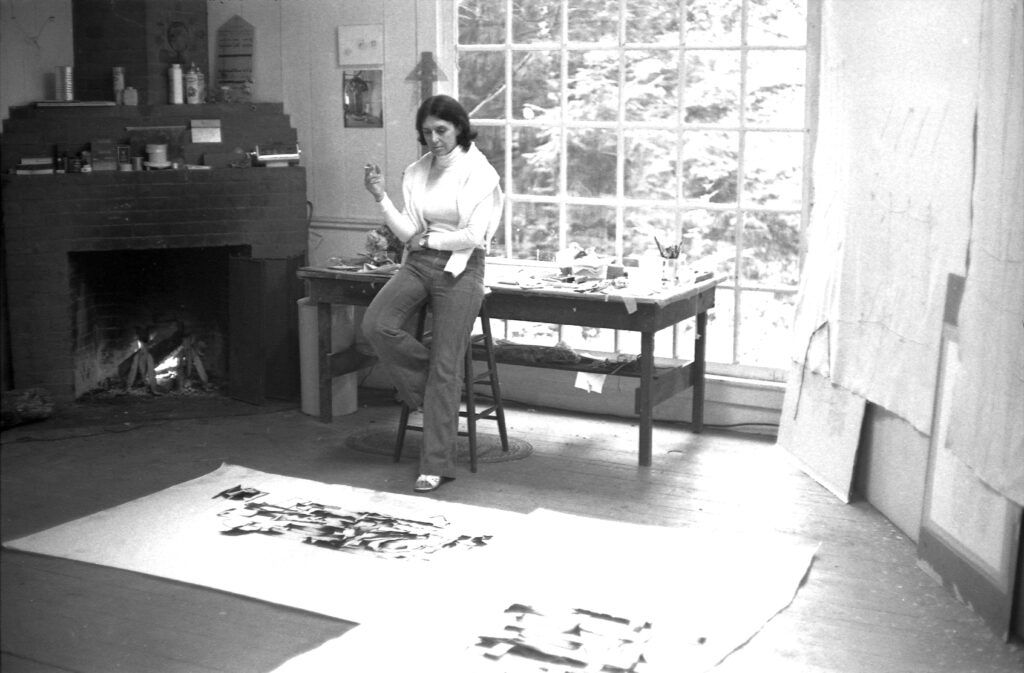
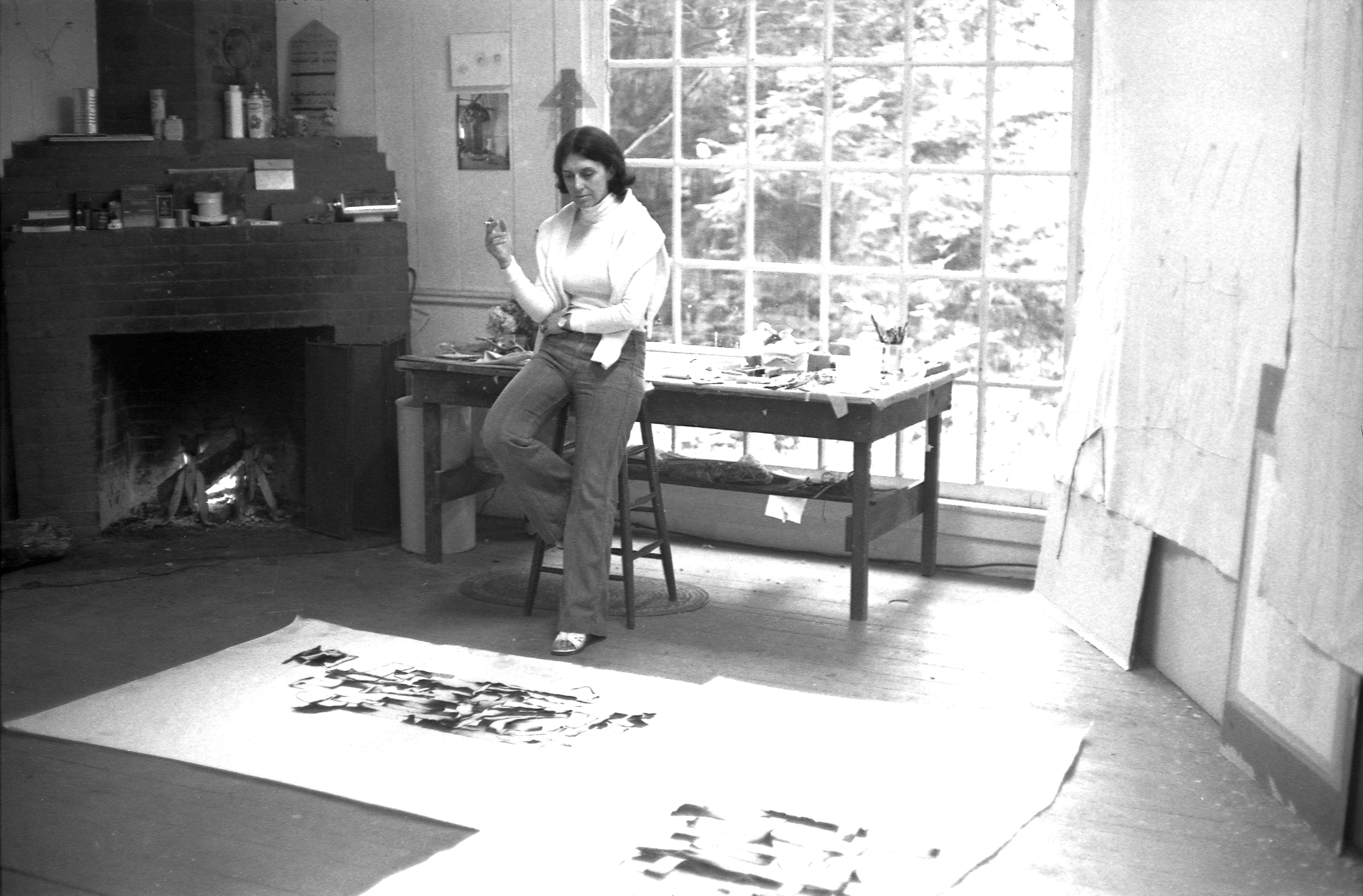
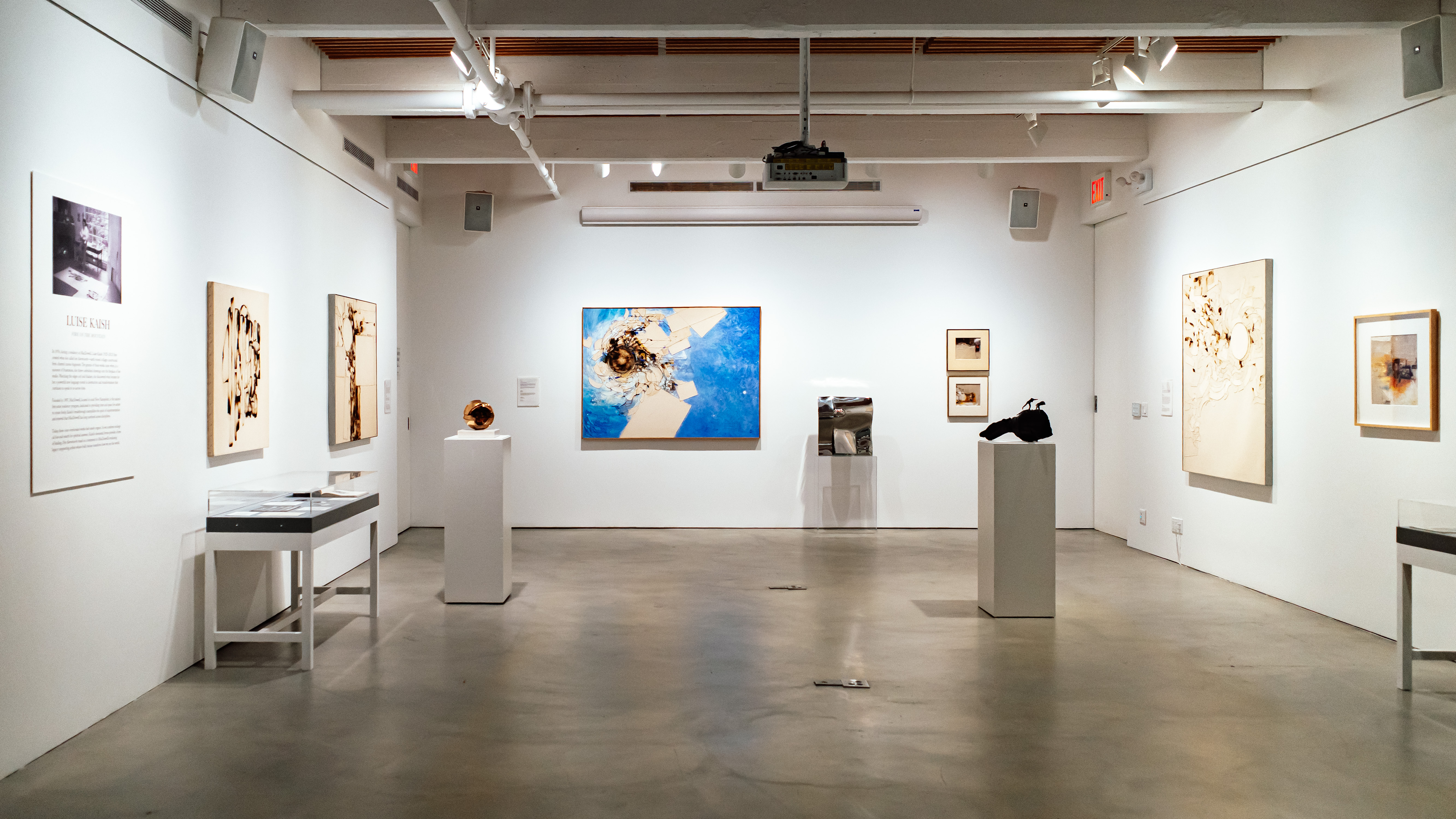
Earth, cracked and charred; trees transformed into blackened toothpicks—horrific images of the aftermath of wildfires fill the news lately. But fire can also be a creative force. Mushrooms thrive on ashes, heralding new growth; metal is purified through intense heat; and fire was Prometheus’s great gift to humankind. Fire on the Mountain, a lyrical exhibition featuring the Burntworks of Luise Kaish at MacDowell NYC, celebrates fire as an agent of destruction and creation. The show featured a selection of Kaish’s works comprising charred canvas collages created during and after her residency at the MacDowell Colony in 1976. Several thematically related sculptures were also on view.
Kaish is not a household name today, but over a career that spanned the late 1940s until her death in 2013, she created a remarkable body of diverse works. This includes monumental ecclesiastical installations, bronze sculptures, painterly collages, and landscape paintings. She worked in both figural and abstract modes, creating works that expressed her fascination with Jewish mysticism, biblical narratives, natural forms and processes, and space exploration. (The last interest received its ultimate expression when her ashes were launched into space aboard the SpaceX rocket in 2019). What united all these themes was a sense of spirituality rooted in the continuity between nature, humanity, and the cosmos. This focus put her at odds with the prevailing critical narratives of the twentieth-century art world. It is only now that the significance of her contributions have become clear.
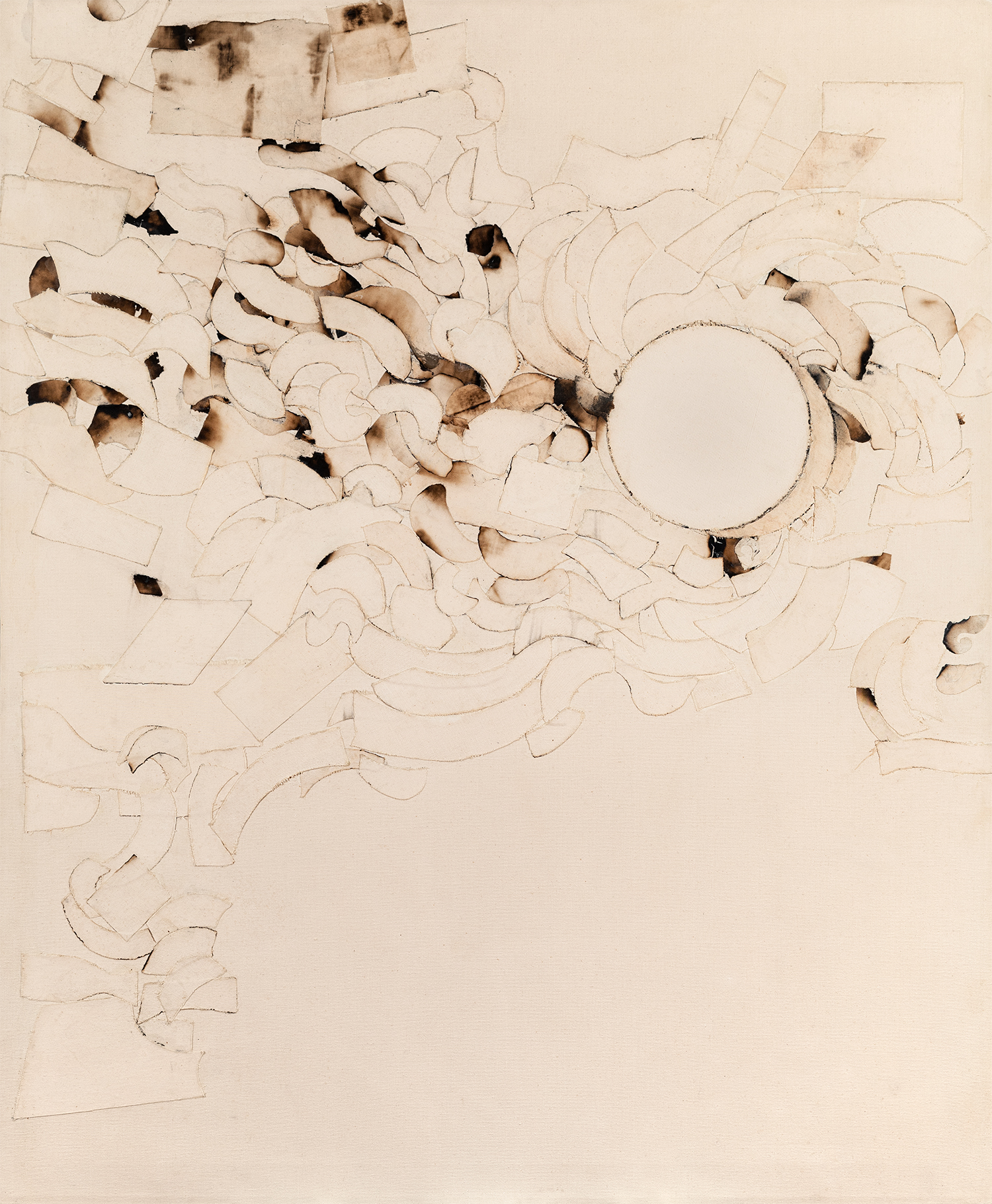
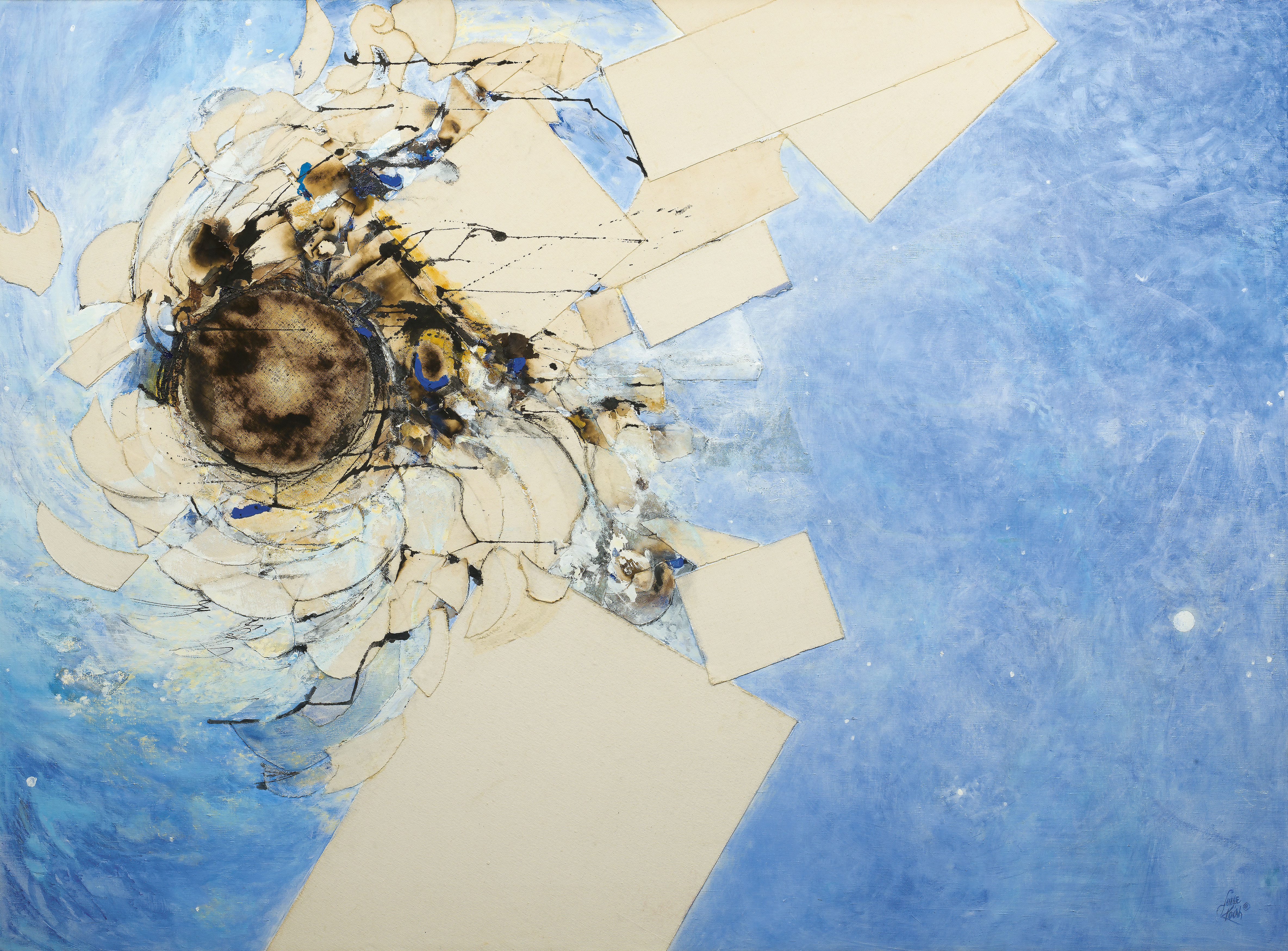
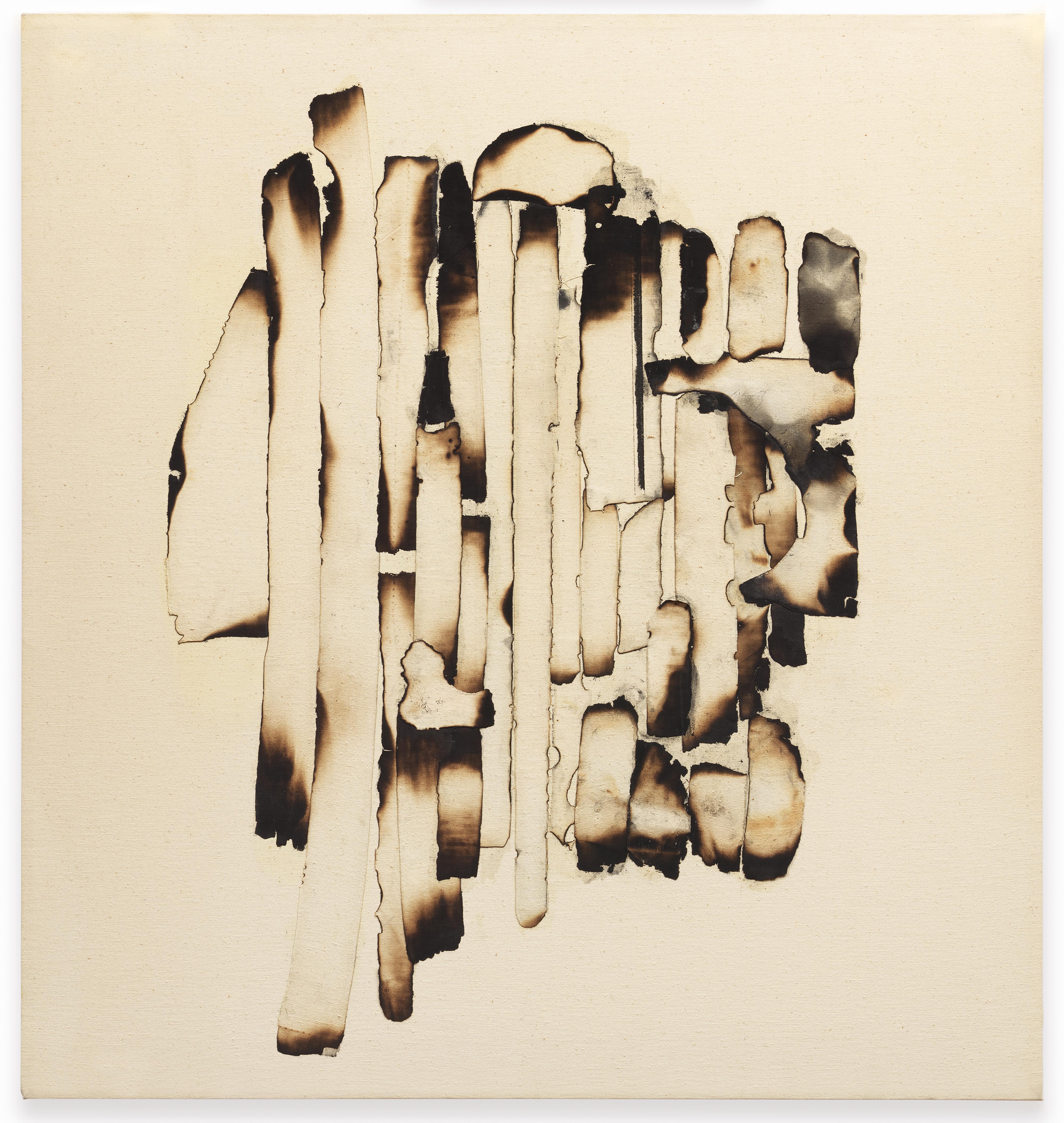
The Burntworks are at once anomalous in Kaish’s oeuvre and illustrative of her larger concerns. Her husband, the late painter Morton Kaish (1927-2025), often related how these works came about during her MacDowell residency, when in a moment of frustration, she cast the canvases she was working on into the fire. As they charred and curled, she had an epiphany, pulled them out, and began weaving their singed strips to create abstract collages. Never shown together during her lifetime, these works are remarkably fresh. Kaish exploited the contrast between smoky ash and blackened cinders around the edges of the canvas, as well as the neutral tone of the untouched areas to great effect. The earliest Burntworks are woven together, with light and dark areas creating an interplay of shadow and light that suggests mysterious depths. As Kaish progressed, they became more complex, as she added horizontal and vertical elements augmented by circular and rectangular forms. Post-MacDowell, she continued to experiment, adding string, ink, and acrylic paint to the compositions, so that the deep black brown of the scorched canvas becomes another kind of pigment.
One can appreciate the Burntworks for their formal sophistication. But their metaphoric qualities are equally striking. Writing about the Burntworks, curator and art historian Norman Kleeblatt distinguishes them from the celebration of destruction in other fire-based works by mid-century artists like Alberto Burri and Lucio Fontana. Instead, he associates Kaish’s collages with the act of bandaging or healing. That seems right, in the context of her lifelong interests. They pulse with energy and vitality, pulling light from darkness, rather than succumbing to it. In fact, one work titled Creation (1977), is dominated by a white orb that seems to be spinning off circular fragments, some tinged with smoky edges. Another work, Monadnock I (1976), also features a white orb among a set of other mostly rectangular white forms that seem to barely hold back a cauldron of blackened fragments.
This exhibition of Kaish’s Burntworks arrives at a moment when numerous non-canonical artists are being rediscovered and celebrated. These works are a reminder of the richness of art historical moments that we only think we know.
Luise Kaish: Fire on the Mountain, curated by Susan Fisher, was on view at MacDowell, New York City, from October 28 through November 7, 2025.
Eleanor Heartney is author of numerous books about contemporary art with a particular focus on politics, spirituality, feminism and eco art. Her most recent book is Edward Augustus Brackett: The Life, Art and Tumultuous Times of an American Original (Silver Hollow Press).