Performa Biennial 2025: Three Live Gems
Performance art has come a long way since the anarchic actions of artists and poets of the Cabaret Voltaire in Zurich in 1916, or the even earlier Italian Futurists’ shenanigans in Turin. The origins of contemporary performance art might be traced to Alan Kaprow’s “Happenings” of the late 1950s, also to Fluxus and Conceptual art practices of the 1960s and ’70s. Unlike those often spontaneous, ad hoc exercises, however, performance art today has become a refined genre, an amalgam of visual art, music, poetry, dance, high-tech special effects, and plenty of low-brow bravado. As a rarefied showcase for the avant-garde, Performa has been featuring some of the most adventurous works in the field since 2004. Founded and directed by art historian and curator RoseLee Goldberg, the Performa Biennial spans most of the month of November, with works performed no more than two or three times. Goldberg is the author of the seminal book on the subject, Performance Art: From Futurism to the Present (recently revised and reissued by Thames & Hudson).
The 2025 Performa Biennial featured eight commissioned performances by a wide range of artists and collaborative teams from around the world. According to the press release, the commissions afforded the artists “an opportunity to realize their most adventurous ideas.” The works “explore multiplicity, uncertainty and the co-existence of differing histories and identities.” The three commissioned works I saw, by Canadian-born, New York-based sculptor Tau Lewis; Pakui Hardware, a Lithuanian artist duo based in Berlin; and sculptor and installation artist Aria Dean, working in Los Angeles and New York—were all elaborate, approximately hour-long performances with divergent themes, but all evincing evocative and ultimately stunning effects. One of the most remarkable aspects of this trio of shows was the strategies used to engage the audience in radically different ways.
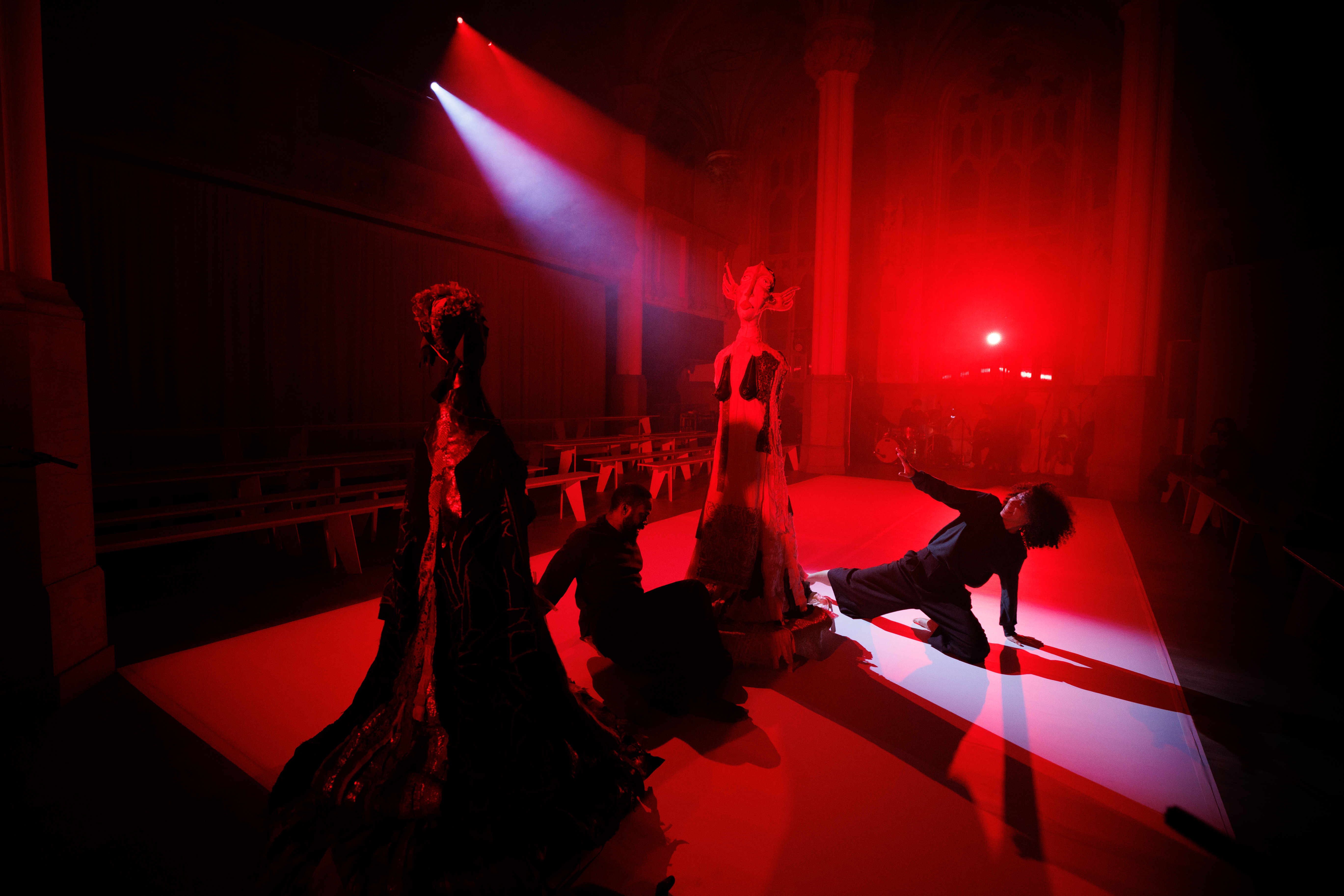
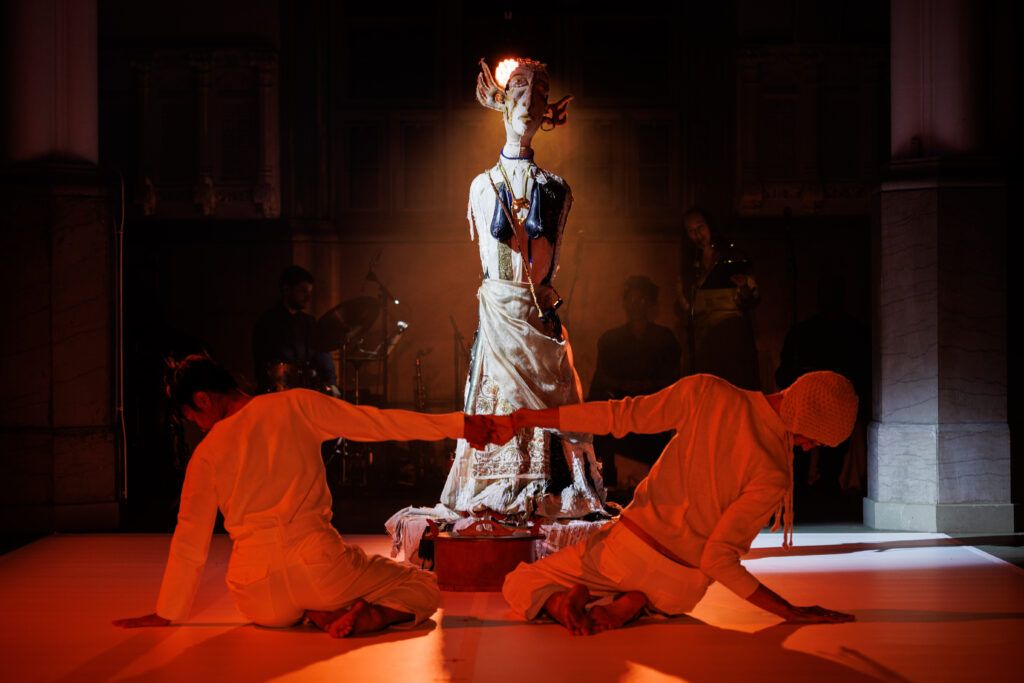
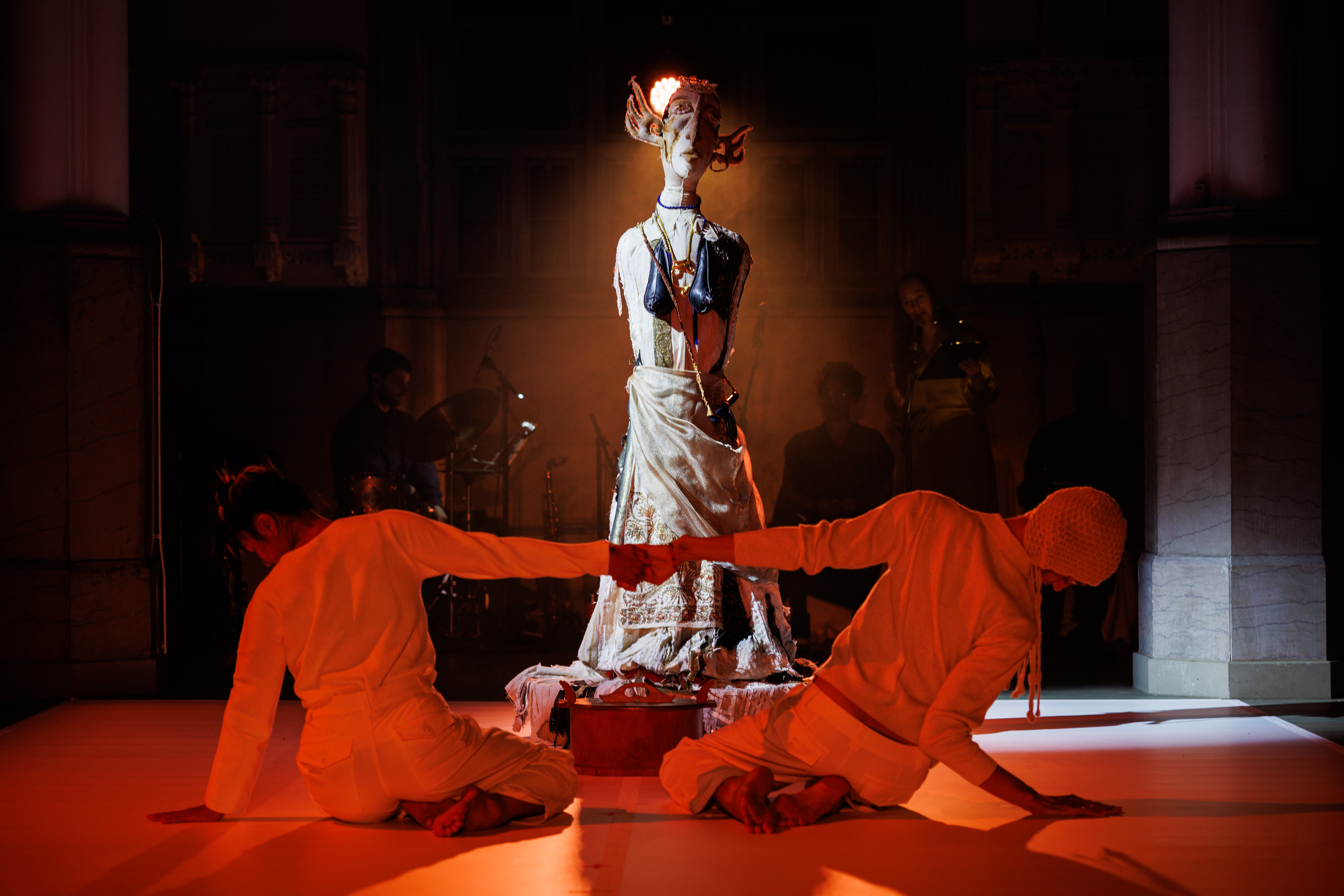
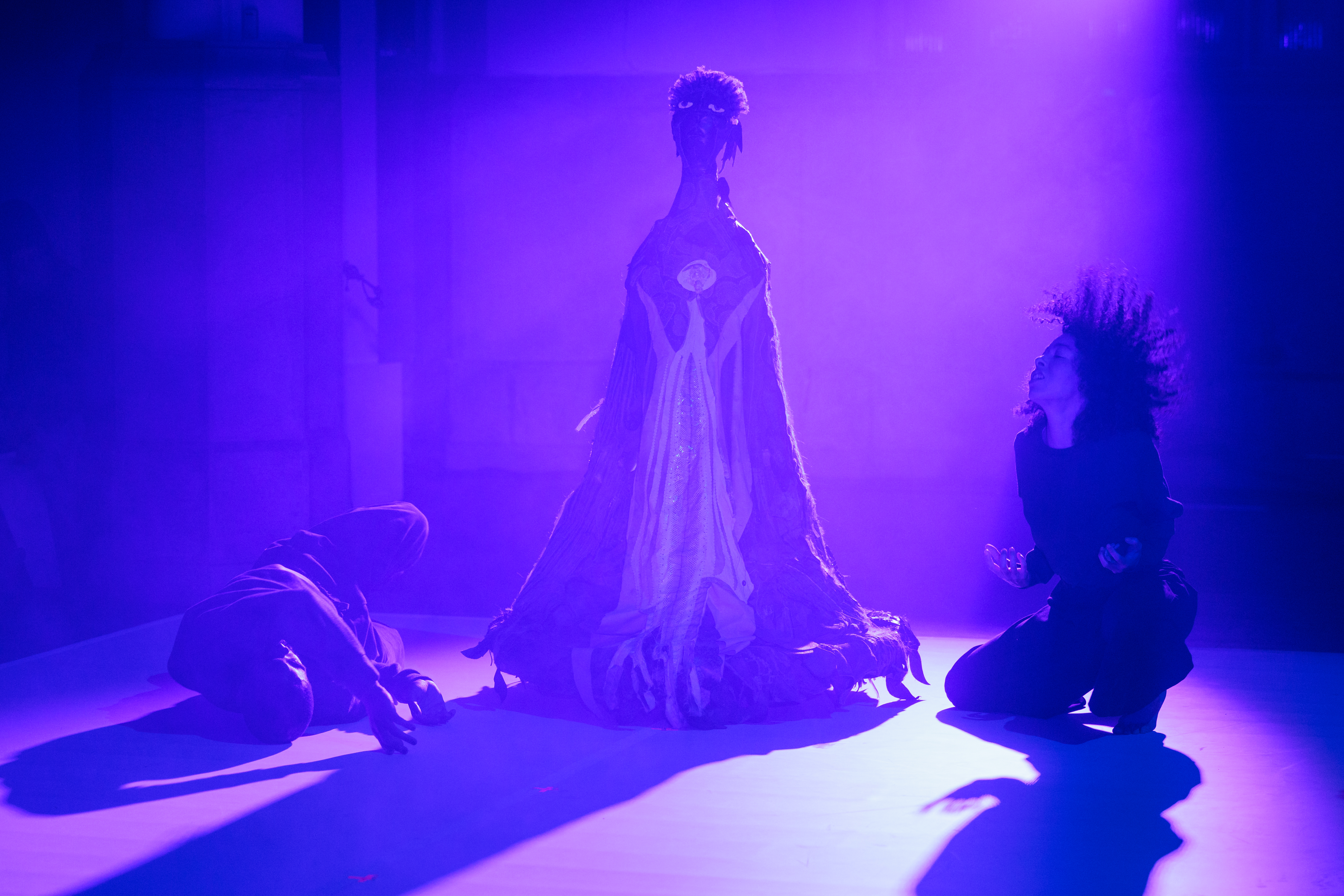
Best known for her fantastical giant masks made of found materials, Tau Lewis presented The Descent of Inanna, curated by Performa’s Kathy Noble, accompanied by a music score by Berlin-based, American composer Lyra Pramuk, and choreography by Jamaican-born dancer Paul Hamilton. The work was performed three times at Harlem Parish, November 6-8. Lewis chose as her theme the ancient Sumerian myth of the goddess Inanna, who travels to the underworld to visit her recently widowed sister Ereshkigal, weaving through a narrative of mortality, transformation, and rebirth. The story closely parallels the later Greek myth of Persephone. Intensified with fog machines, dense atmospheric lighting, and music that alternated among electronica, folk, and classical motifs, the work was effectively transportive—I felt a distinct influence of Laurie Anderson and Bjork in some of the passages. Tiered bleachers, designated for the audience, flanked a long, narrow passageway. The singers and musicians were positioned at one end while the dancers laterally traversed the center space, back and forth, rather like a runway fashion show. A towering sculpture by Lewis, pearl (2025), played the part of Inanna. This eerie humanoid mannequin with exaggerated features was wheeled across the room by the dancers who dressed and undressed the figure periodically, conjuring the magical rites and ritualistic processions of ancient religions.

Pakui Hardware’s performance, Spores, centers on contemporary mental health concerns and involves an imaginative therapy session between a vocalist protagonist and an AI therapist. Scrims with projected texts and an operatic libretto addressed issues such as the societal impact of technology and social media. The performance itself, however, was an all-immersive experience that took place at Connelly Theater in the East Village, for three nights, November 14–16. Audience members entering the performance space stood around a lone figure reclining on a couch with one arm raised, while a video projection of a hand echoed the gesture like an expansive form of sign language.

Electronica strains by composer Miša Skaliskis slowly filled the space, as the figure stood in the middle of the room and began to sing. The charismatic performer, Justina Mykolaitytė, a virtuoso vocalist, and co-author of the song score, could have carried the entire show. Eventually, however, she leads a large ensemble of singers and dancers in street clothes who emerge one-by-one from the audience to sing and race around the room in a kind of athletic dance crafted by choreographer Andrius Katinas. Soon the audience becomes an integral part of the performance. It is difficult to describe the thrill of an anonymous person standing next to you in a crowd who suddenly bursts into song. During the course of the hour, it was often tempting to sing along or join the performers in their spirited movements—a successful therapy session, indeed.
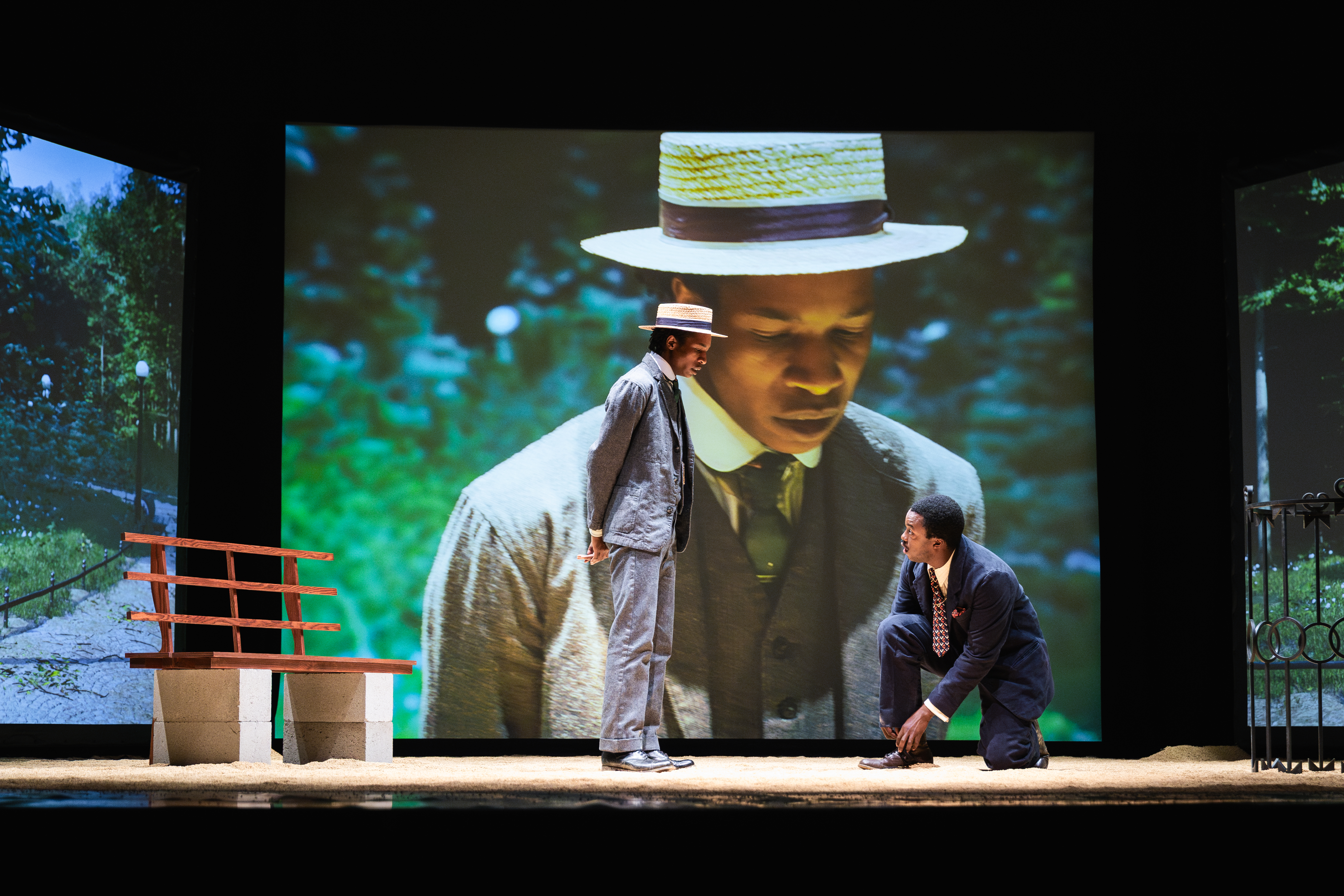
Aria Dean’s evocative, provocative, and technically adventurous work, The Color Scheme, appeared at the Abrons Arts Center theater for three performances, November 20–22. The conventional theater setting contrasted with the unconventional proceedings on stage. The show’s narrative, a period drama of sorts, takes place in the sculpture-lined walkways in Berlin’s Tiergarten just after World War I. In the manner of a one-act play—by Edward Albee, perhaps—two well-dressed men in historical attire, Black American expatriates, a poet and a philosopher (played by Nile Harris and Zaid Arshad, respectively), stroll through the historic garden depicted in background video projections on three screens.
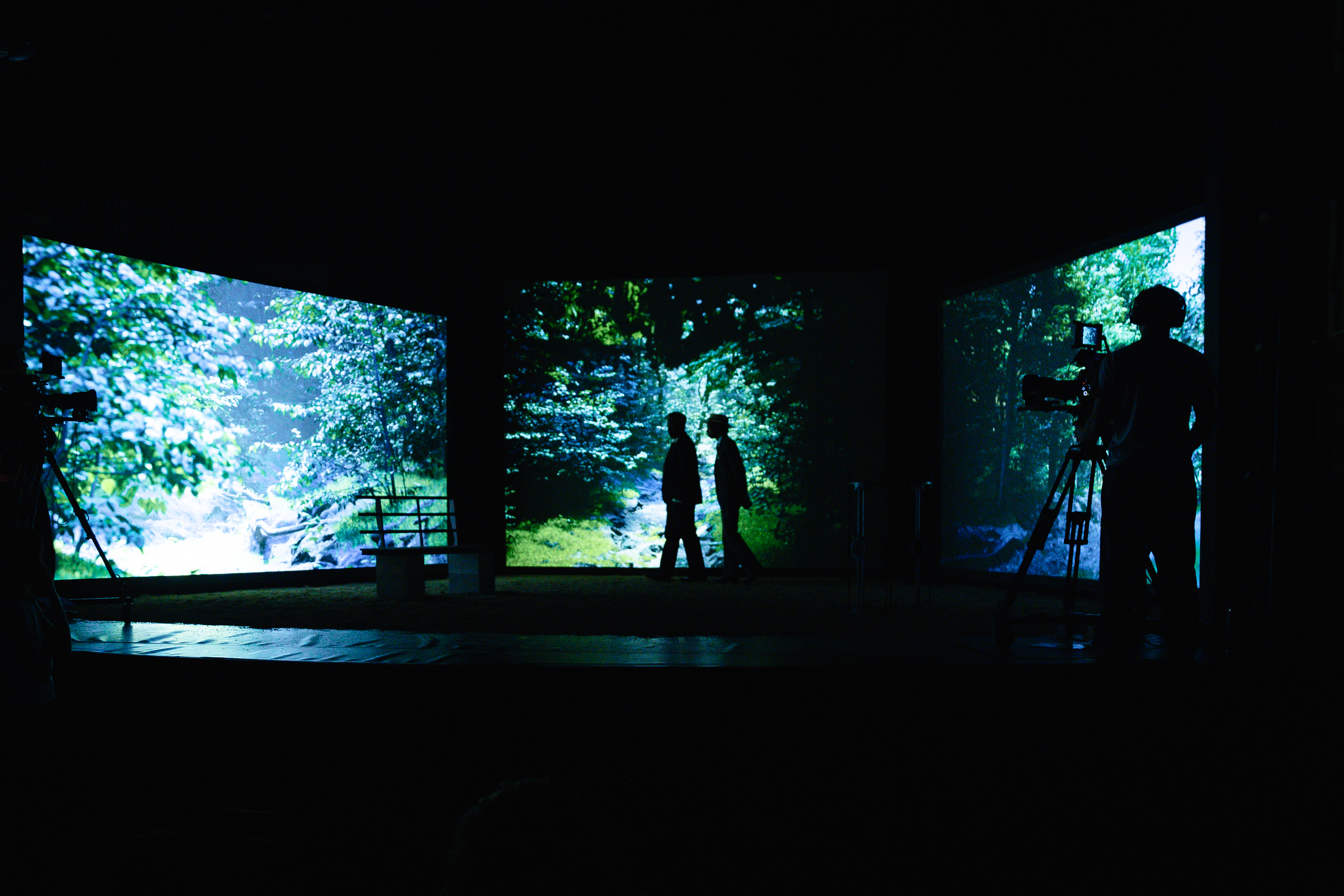
At first, the situation implies a cruisy pick-up scenario, but the couple embark on an intense and wide-ranging discussion. Often with touches of humor, the pair delve into themes of identity and racial politics, nationalism, and aesthetics—specifically, as the program notes describe, “how innovations in artistic form might produce a historical consciousness.” Simultaneously, two videographers record and project the performers’ actions in real time on the three large screens that span the stage like a hyper-active triptych. Dean’s work is ultimately a cerebral exercise merging past and present, reality and fiction, proving that the possibilities of performance art are limitless.