Robert Mangold: Pentagons and Folded Space
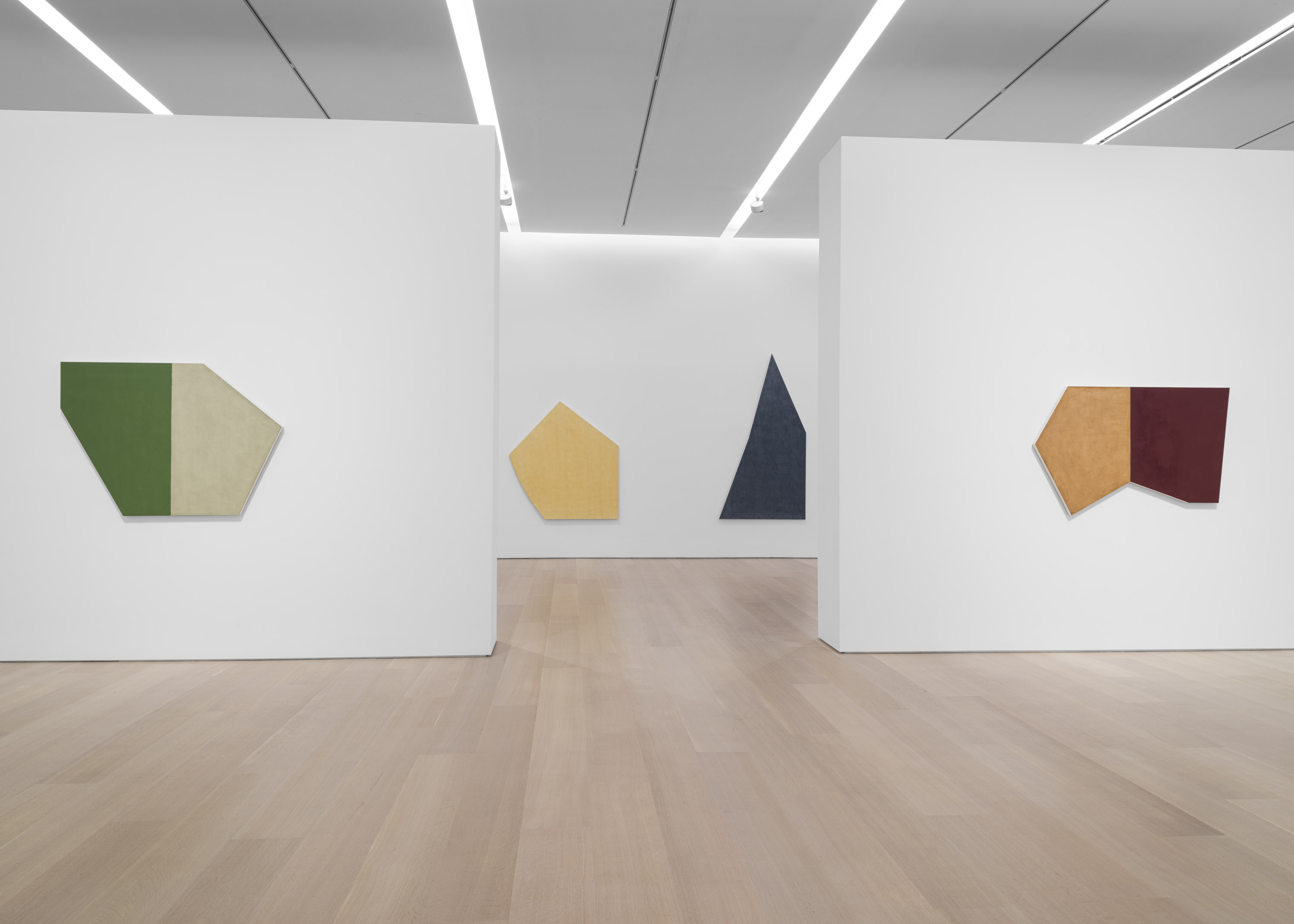
In a time of unprecedented upheaval and uncertainty, Robert Mangold’s serenely radiant exhibition of recent work, Pentagons and Folded Space, offers us a reassuring vision of a far more considered, less muddled realm. Mangold, a master abstractionist who rose to prominence during the heyday of Minimalism in the 1960s, is still seeking—and finding—new possibilities based on his purposefully spare formal vocabulary. His production, remarkably consistent, is equally remarkable in that it is never the same.
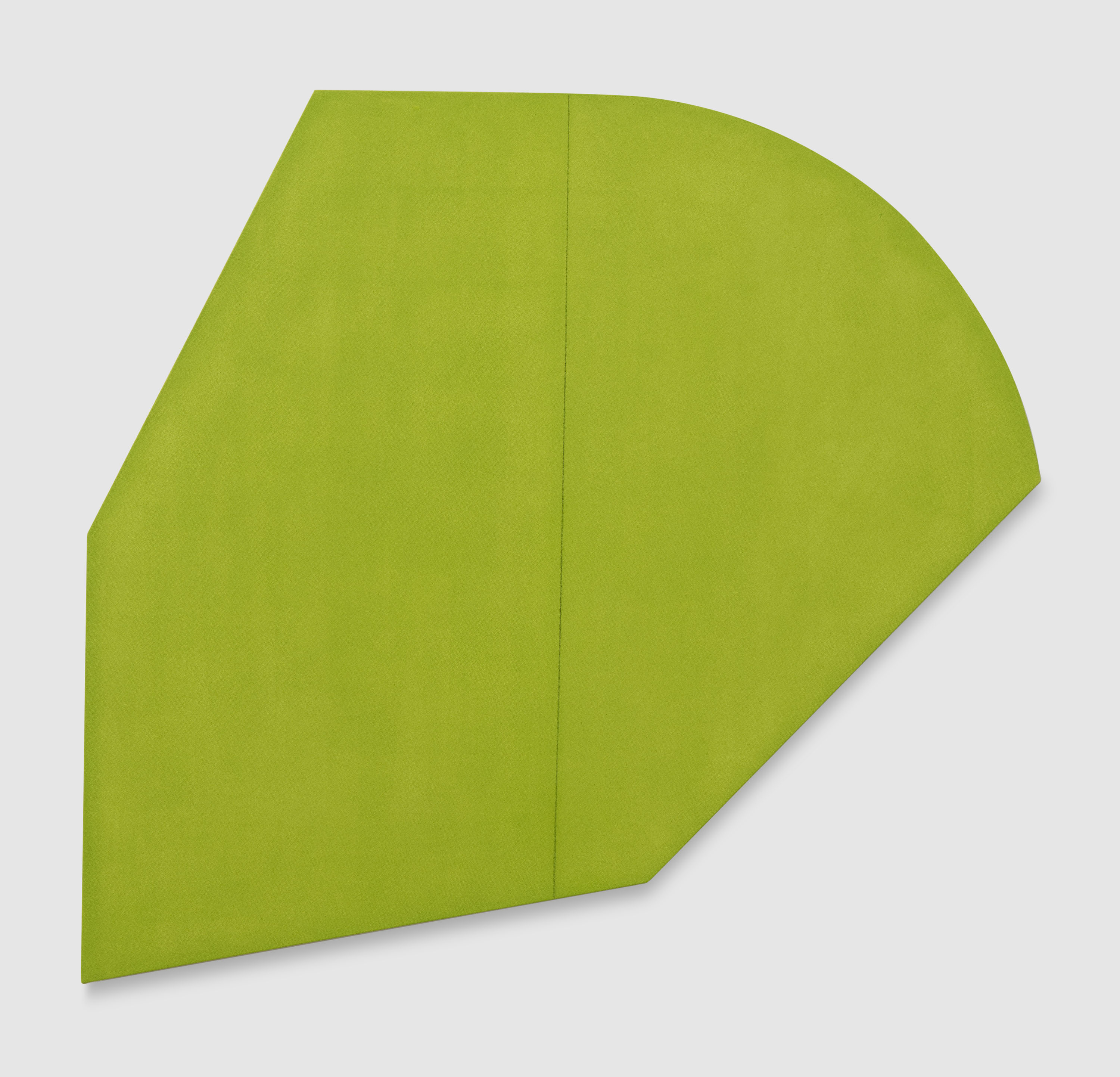
Installed on two floors, the natural light that streams through the seventh-floor gallery’s windows highlights a wonderfully cadenced procession of sharply profiled geometric shapes on paper, titled Folded Space, executed in pastel, graphite, and black pencil. Also on view are a few paintings, among them Divided Image, 2024, a lime green gem that is positively incandescent, like the rarified light that emanates from a Piero della Francesca fresco.
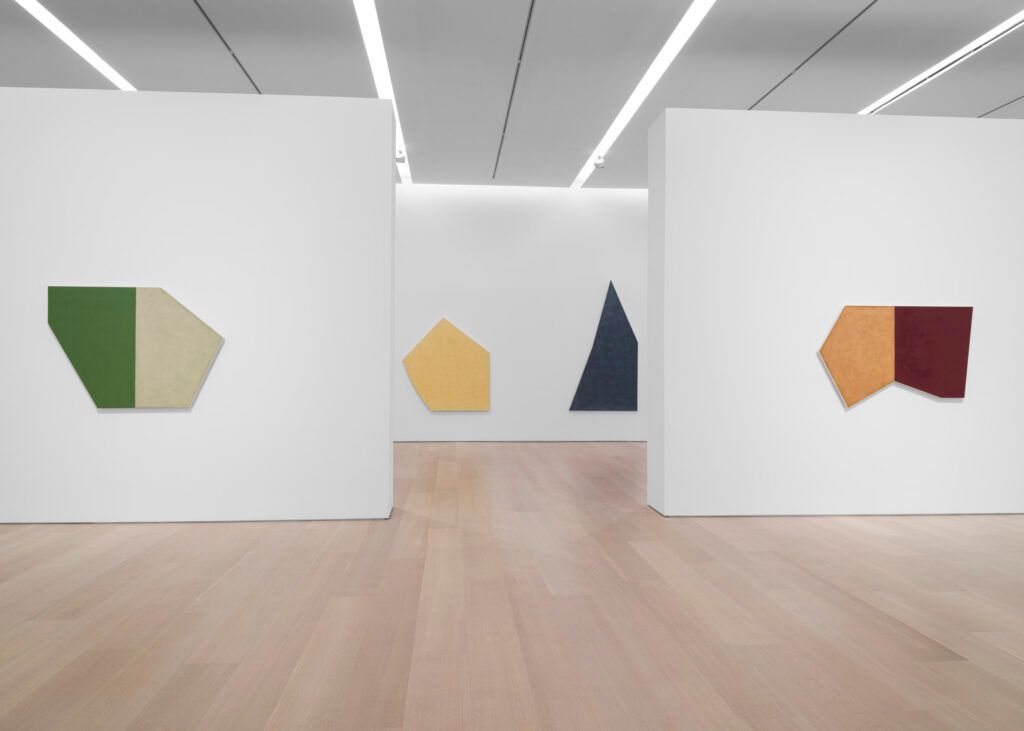
On the second floor, an installation of nineteen paintings—made between 2022 and 2024—is equally buoyant, equally uplifting. All are shaped canvases, their compositions based on pentagons and combinations of pentagons, creating constructs that are irregular, dynamic, and are as sharply edged as the origami-like works on paper.
Mangold has been exploring shape, color and line—his penciled line, a delineation of exquisite delicacy—for more than six decades, yet it is striking how fresh these recent works look. His paintings, once considered austere and reserved, appear unexpectedly expressive in these newer incarnations, their admirable clarity of a different order. The colors are richer, more sensuous, the surfaces subtly modulated—sometimes a grid of sorts appears. They are monochromes for the most part, although I use the term advisedly, since there are more colors involved in the paintings than the surface color and there are so many colors on view that you feel immersed in a full spectrum, even if in individual salvos. The palette is his usual one: lime, yellow, blue, green, tan, red, burgundy, gray—a mid-century color scheme that Mangold might have influenced as well as been influenced by. There are several marvelous two-toned compositions, another mid-century trope, some close in value while others are boldly contrasted, such as Double Pentagon Oxide 4 and Double Pentagon Oxide 3, from the “Oxide Series,” 2023, one green and grey, the other tan and burgundy. Each join two pentagons together to form a horizontal polygon, a hybrid of sorts, its push/pull of color and form compelling us to look longer to read its multiple permutations.
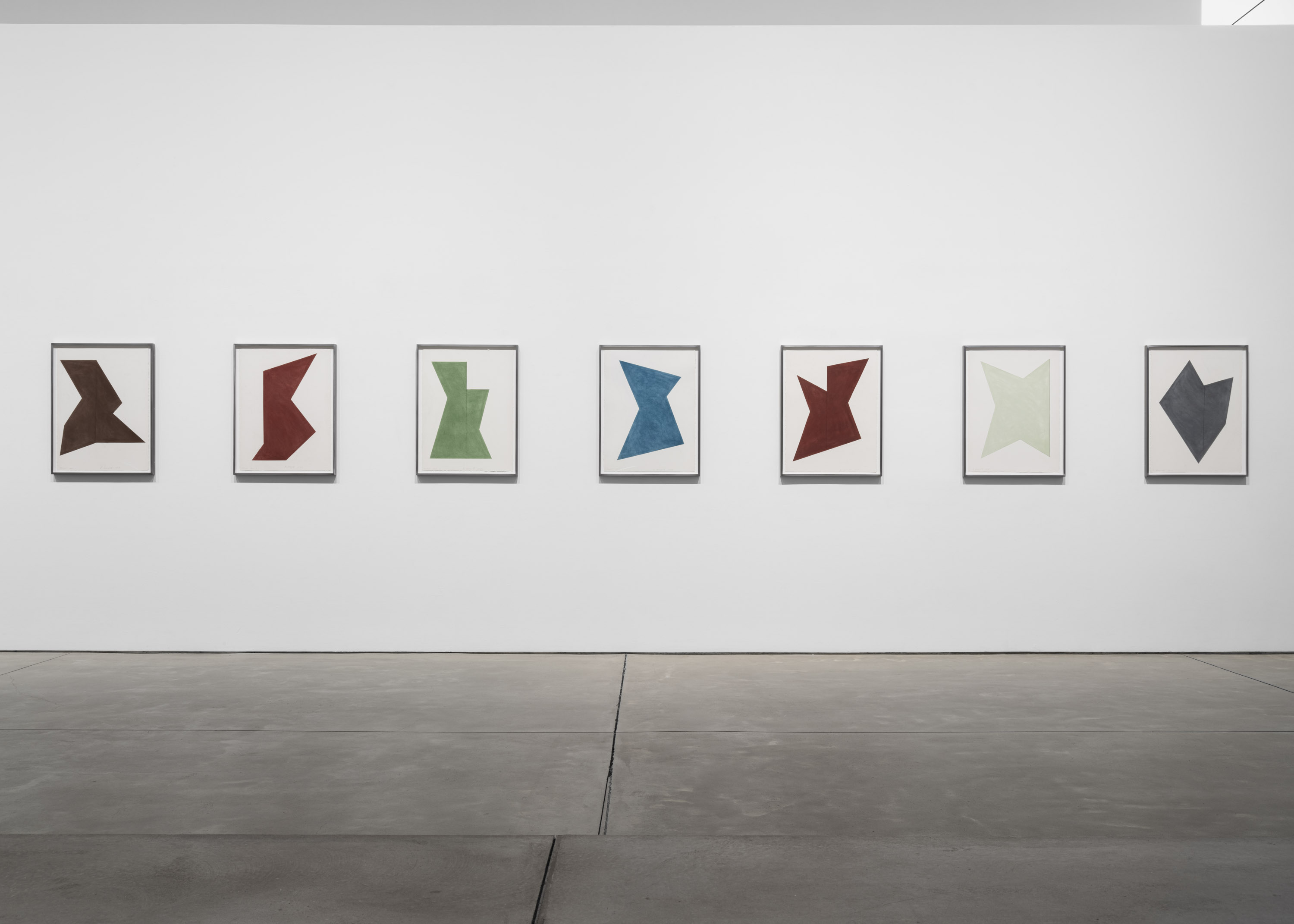
Mangold once said that he is “interested in the idea of presenting as simple, economical, and as wholly readable a statement as possible.” This is arguably somewhat disingenuous, further evidenced in this exhibition, as he continues to create spare, yet complex visual statements with unabated focus—and something else that we might call grace.
Robert Mangold: Pentagons and Folded Space, at Pace Gallery, New York, May 9 to August 15, 2025.